
When to Use Lifting Straps (and When Not To)

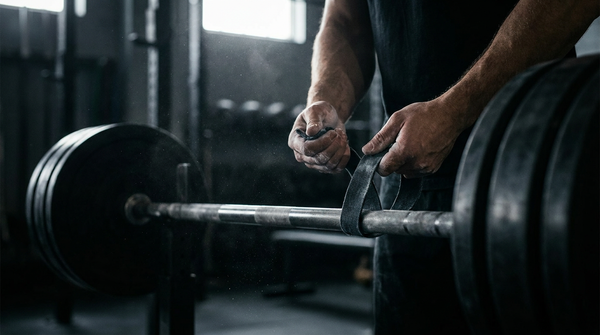
Lifting straps are one of the most useful tools in the gym, but only if you use them at the right time. Too many lifters either slap them on every set or avoid them altogether because they think it's "cheating." The truth is in the middle.
In this guide, we'll cover:
When lifting straps give you the biggest advantage
The specific lifts that benefit most from straps
When you shouldn't use them
When to start using straps as a beginner vs. advanced lifter
Pro tips to get more out of every set
By the end, you'll know exactly when to use lifting straps to break through plateaus without sacrificing grip strength.
Why Use Lifting Straps?
Your grip strength is often the limiting factor in pulling exercises. Your back, traps, and hamstrings may be strong enough to keep going, but if your hands give out first, your set is over.
That's where straps come in. By locking your wrists to the bar, lifting straps:
Prevent grip failure from cutting sets short
Let you train the target muscle harder
Help you move heavier weight safely
Increase total training volume for more gains
Bottom line: straps let you push your pulling lifts further than your grip alone allows.
Exercises Where Straps Help (and Where They Don't)
Straps aren't a one-size-fits-all tool. They belong on specific lifts where grip is the bottleneck, not the point of the exercise.
Use Straps For:
Conventional and Sumo Deadlifts (heavy sets). Once you're pulling 80-85% of your max or pushing high reps, grip gives out before your posterior chain does. Strap in for working sets.
Romanian Deadlifts. High-rep RDLs torch your hands fast. Straps let your hamstrings and glutes do the work they're supposed to do.
Rack Pulls. Overload movements where you'll exceed your standard deadlift. Grip fails early without straps.
Barbell and Dumbbell Rows. If your grip goes before your lats hit proper fatigue, you're leaving gains on the table.
Shrugs. Trap training requires volume and heavy weight. Straps keep your hands from burning out first.
Lat Pulldowns (heavy sets). On max-weight sets, straps keep your grip from breaking the mind-muscle connection to your lats.
High-Rep Conditioning Sets. Kettlebell swings, sled pulls, barbell complexes: use straps when grip isn't the variable you're trying to train.
Skip the Straps For:
Warm-up sets. Free grip training built into every session. Don't skip it.
Olympic lifts (cleans, snatches). Straps interfere with bar turnover. Never strap in here.
Farmer's carries and static holds. The whole point is grip development. Straps remove the training stimulus.
Bench press and overhead press. These don't stress grip the same way. Straps don't belong here.
Every set of every exercise. Over-reliance stalls grip progress. Use straps strategically.
Beginner vs. Advanced: When to Start Using Straps
Beginners (0-12 months)
Hold off. In your first year, grip strength develops quickly alongside everything else. The loads you're handling rarely make grip the true limiting factor. If it is, your grip needs to catch up, and the only way that happens is by training it without straps.
Focus on double-overhand grip on deadlifts, heavier rows without assistance, and farmer's carries in your accessory work. Your grip will adapt if you're consistent.
Intermediate Lifters (1-3 years, pulling 1.5x+ bodyweight)
This is when straps start to make sense. Once you're pulling meaningful weight, your grip will legitimately fail before your back does on heavy sets. Start using straps for top sets and heaviest working sets. Keep warm-ups and lighter work strap-free.
A practical rule: if you failed a set because your hands opened, not because the weight was too heavy, straps belong in your bag.
Advanced and Competitive Lifters
At this level, straps are standard in accessory and hypertrophy work. You're training with enough volume that unassisted grip becomes a recovery burden on top of everything else.
One caveat: powerlifting competitions don't allow straps on the platform. Keep some heavy training raw so competition day doesn't feel foreign.
Pro Tips for Smarter Strap Use
Save them for heavy sets. Warm up raw, strap up for top sets.
Combine with chalk. Chalk first, then straps. Maximum bar security.
Use 18" straps. Quicker to wrap, less bulk, better fit for most pulling movements.
Keep training your grip. Farmer's carries, dead hangs, and fat bar holds keep grip strong even if you use straps regularly.
FAQs About When to Use Lifting Straps
Q: Will straps weaken my grip over time?
A: Only if you rely on them for every lift. Use them strategically and your grip will stay strong.
Q: Should beginners use straps?
A: Not right away. Build a base of grip strength first. Once you're pulling heavy enough that grip fails before your target muscle, bring straps in for top sets.
Q: Are straps allowed in competitions?
A: Not in powerlifting or Olympic lifting. They're fine for bodybuilding, hybrid training, and general gym work.

GRIP UPGRADE
Battle Straps — Premium Lifting Straps
18" heavy-duty cotton with reinforced stitching and 3mm neoprene padding. Lasso-style, non-slip, and built to last. Stop letting grip end the set.
Shop Battle Straps — $15.49 →Final Word
Lifting straps are a performance tool, not a shortcut. Strap up for heavy pulls, high-rep sets, and back-focused lifts where grip holds you back. Go raw for warm-ups, Olympic lifts, and grip-specific training. If you're a beginner, earn the straps first. If you're intermediate or advanced, use them smart.
Ready to pull more weight? Grab a pair of Battle Bunker Weightlifting Straps, 18" heavy-duty cotton with non-slip texture and padded comfort, built for lifters who refuse to let grip stop their gains.
 length: 62901 lines: 1311