Resistance Bands vs Weights: Which Builds More Strength?

If you're looking to build strength, the question always comes up: Should I train with resistance bands or weights? Both tools can help you get stronger, but they work in different ways. In this guide, we break down the pros and cons of each, explain when to use them, and show you how to combine both for better results.

How Resistance Bands Work
Resistance bands use elastic tension to provide resistance as you stretch them. Unlike weights, which have a fixed load, bands increase resistance the further you stretch them. That variable tension means your muscles are working hardest at the end of the range of motion, which is different from what free weights do.
Our Battle Bands 3-Pack comes in three sizes:
- 13mm (10–25 lbs) – Perfect for warm-ups, mobility, and lighter accessory work.
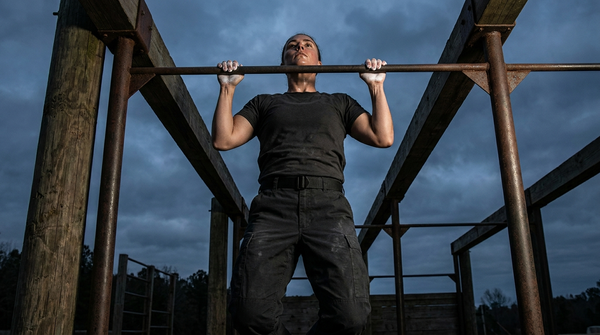
- 21mm (18–45 lbs) – Great for assisted pull-ups, moderate pressing, and general training.
- 45mm (50–125 lbs) – Heavy-duty strength work, squats, deadlifts, and explosive training.
That range makes bands a practical tool whether you're training at home, on the road, or in the gym.
How Weights Work
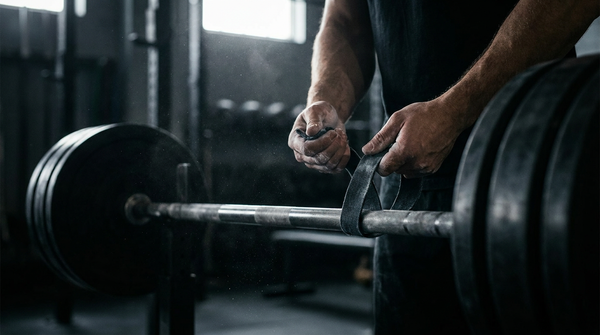
Weights (dumbbells, barbells, kettlebells) provide constant resistance throughout the movement. Gravity does the work, and the load doesn't change based on where you are in the rep. That consistency makes them straightforward to program and progress.
This makes weights excellent for:
- Progressive overload (gradually increasing load over time)
- Maximal force output
- Building raw muscle and power
Barbells and dumbbells are still the standard for strength training. But that doesn't mean bands can't play a significant role in your program.
Resistance Bands vs Weights: Head-to-Head Comparison
| Factor | Resistance Bands | Weights |
|---|---|---|
| Cost | Low ($20–$60 for a full set) | High (hundreds to thousands for a home setup) |
| Portability | Fits in a backpack, train anywhere | Heavy, requires a gym or dedicated space |
| Muscle Activation | High at end range, great for stabilizers | Consistent across full range of motion |
| Progressive Overload | Limited, harder to measure exact resistance | Precise, easy to add 5 lbs at a time |
| Joint Stress | Lower, smooth tension reduces impact | Higher, especially under heavy loads |
Pros and Cons: Resistance Bands
Benefits
- Portable and lightweight. Train anywhere.
- Easier on joints due to variable, smooth resistance
- Great for warm-ups, mobility, and recovery work
- Perfect for assisted movements (pull-ups, dips)
- Affordable compared to a full gym setup
Limitations
- Harder to measure exact resistance
- Not ideal for building maximal strength on their own
- Can wear out over time with heavy use
Pros and Cons: Weights
Benefits
- Best tool for progressive overload and long-term strength
- Measurable, consistent resistance
- Build maximum muscle mass and power
- Versatile across all major lifts (squats, bench, deadlift)
Limitations
- Heavy and not portable
- More expensive to set up at home
- Higher injury risk if technique breaks down
Which Builds More Strength?
Here's the straight answer:
- Weights are better for maximum strength and muscle growth. They allow precise loading and progressive overload, which are the two main drivers of long-term strength development.
- Resistance bands are better for versatility, joint-friendly training, and accessory work. They add variety, build stability, and keep muscles under tension in ways that free weights don't.
The best approach uses both. Bands complement weight training. They don't replace it.
The Hybrid Approach: Using Bands and Weights Together
You don't have to pick one. Combining bands with weights gives you benefits that neither tool delivers on its own. Here's how to put them together in a practical training week.
Band-Resisted Barbell Lifts
Loop bands around a barbell for squats or bench press. As you move through the rep, the resistance increases. This trains you to accelerate through the sticking point and builds power at the top of the lift. Powerlifters and strength coaches have used this method for decades.
Warm-Ups Before Heavy Work
Use the lighter band for hip activation, shoulder circles, and band pull-aparts before your main lifts. This primes the muscles and improves your positioning, which means better performance and fewer injuries.
Drop Sets and Finishers
Go heavy with dumbbells or a barbell for your main sets. Then switch to bands to extend the set without loading the joints further. This keeps the muscle under tension and drives more work without the recovery cost of adding more weight.
Accessory and Weak-Point Work
After your main lifts, use bands to target specific weak points. Banded pull-throughs for glutes, face pulls for rear delts, and banded rows for upper back are all effective additions to a standard strength program.
A practical split might look like this: hit your compound lifts with weights Monday, Wednesday, and Friday. Use bands for warm-ups every session, and add band-only work on active recovery days or when you're traveling and don't have gym access.
Best Times to Use Resistance Bands
- At Home or On the Road. Bands make sure you never miss a session.
- Warm-Ups and Mobility. Perfect for activating muscles before heavy lifts.
- Adding Resistance to Bodyweight Exercises. Push-ups, squats, hip thrusts.
- Rehab and Joint-Friendly Training. Smooth tension reduces strain on recovering joints.
Best Times to Use Weights
- Building Maximal Strength. Squats, bench, deadlifts.
- Progressive Overload Programs. Easy to track and increase load week over week.
- Muscle Hypertrophy. Consistent, measurable resistance for growth.
- Power and Performance Training. Olympic lifts, explosive strength work.
FAQs: Resistance Bands vs Weights
Q: Can resistance bands replace weights?
A: For beginners or travel training, they can work well. For building maximum strength and muscle mass, weights are more effective long-term.
Q: Do bands build muscle?
A: Yes, especially for beginners and intermediates. They create mechanical tension and can drive hypertrophy. Over time you'll want heavier resistance from free weights to keep progressing.
Q: Which is better for fat loss?
A: Both. Fat loss comes down to calorie deficit and total training volume. Bands or weights can get you there.
Q: Are bands safer than weights?
A: Generally yes. Less joint stress, but use them correctly. Bands can snap under heavy loads if they're worn or improperly secured.

GEAR UP
Battle Bands — 3-Pack Resistance Bands
10-125 lbs of variable resistance. Built for pull-up assistance, mobility, and full workouts anywhere. Three bands, one kit, no gym required.
Shop Battle Bands — $39.00 →Final Word
Resistance bands vs weights. The answer isn't one or the other. Use weights for maximum strength and progressive overload. Use bands for versatility, mobility, and muscle activation. Combine them for a training approach that covers every base.
Ready to add bands to your setup? The Battle Bands 3-Pack covers everything from warm-ups to heavy-duty strength work, in three resistance levels that fit any training goal.