
Battle Bunker Flagship Competition: An Honest Look at What Happened

The Battle Bunker Flagship was a hybrid fitness competition created by Austen Alexander, built around the same training philosophy the brand is based on: strength and endurance together, not separately. This is an honest look at how it went, what worked, what didn't, and what it tells you about what Battle Bunker is actually building.
What the Flagship Competition Was
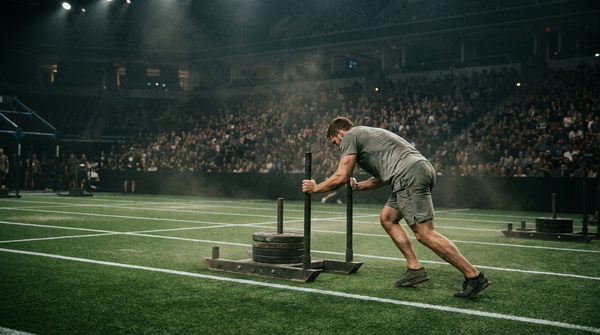
The Battle Bunker Flagship was a grassroots hybrid fitness event, not a polished commercial competition. It brought together athletes who train across multiple domains: lifting, running, rucking, and bodyweight work. The events reflected that. Pull-ups, loaded carries, running intervals, and strength work were all part of the mix.
The idea came from a simple observation: most fitness competitions are either pure strength (powerlifting, Olympic lifting) or pure cardio (5K, marathon). Hybrid competitions that actually test both are rare. The Flagship was an attempt to build something in that space.
What Worked
The event format held up. Athletes who trained hybrid performed well across all events, and athletes who specialized struggled predictably in their weak areas. That validated the training philosophy. If you run but don't lift, the loaded carry will expose you. If you lift but don't run, the conditioning pieces will break you.
The community response was real. People who showed up were serious about training, not just there for the t-shirt. That's the kind of athlete Battle Bunker gear is built for: the person who runs in the morning, lifts at lunch, and doesn't stop when the season changes.
The competition also generated content that was honest and useful. Watching real athletes struggle with and then complete events like a heavy sandbag carry after a 400m sprint tells you more about hybrid fitness than any training article can.
What Didn't Work
Logistics are harder than programming. Organizing a live competition at this scale, with real athletes and real time pressure, exposed gaps in event management that training preparation doesn't cover. Some transitions between events were slower than planned. Timing and judging needed more structure than a grassroots event typically builds for.
The entry pool was also smaller than hoped. Hybrid fitness as a competitive category is still building its audience. Most people who train like this do it for personal goals, not competition. Getting them to sign up for an event takes more marketing infrastructure than Battle Bunker had at the time.
What It Means for the Brand
The Flagship confirmed that hybrid fitness has an audience that responds to authenticity. People who use resistance bands for pull-up work, train with ab straps for core, and carry a weighted vest on their runs are not casual gym-goers. They're serious about their training and they can tell when a brand actually understands that kind of training versus just marketing to it.
The gear that Battle Bunker sells grew out of the same training environment the Flagship was designed to test. The lifting straps exist because grip fails before the target muscles on heavy pulls. The wrist wraps exist because pressing heavy with compromised wrist position cuts sessions short. The competition put those needs on display.
The Honest Assessment
Success or failure depends on what you were measuring. If the standard is a perfectly run large-scale event, the first Flagship was a work in progress. If the standard is whether it validated the training philosophy and community that Battle Bunker is building around, it worked.
Hybrid fitness is not a trend. Strength and endurance have always mattered together for military, tactical, and competitive athletes. The Flagship was one attempt to put that into a competition format. It will get better with more reps, the same way any skill does.
The athletes who showed up and competed are the ones the brand is for. That part worked exactly as intended.