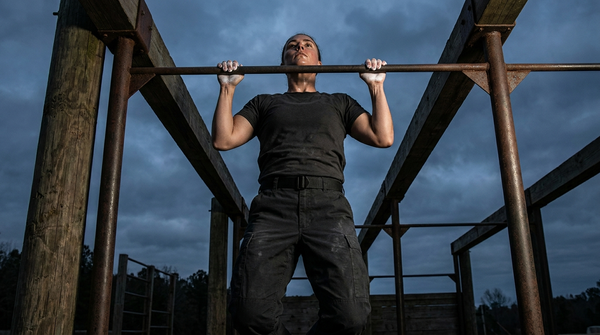

How to Build a Calisthenics Workout Routine

Calisthenics is more than just a workout style, it’s a disciplined approach to building functional strength, mobility, and endurance using your own bodyweight. Whether you’re a beginner or an experienced athlete looking to refine your routine, understanding how to build a calisthenics workout routine effectively is essential for consistent progress and injury prevention.
At Battle Bunker, we’re passionate about hybrid training and military-style discipline, and we know that a well-structured calisthenics routine can transform your fitness journey. In this comprehensive guide, we’ll walk you through the key components of creating an effective calisthenics workout routine, practical tips to get more from your training, and how to incorporate Battle Bunker training gear like resistance bands, wrist wraps, lifting straps, and ab straps to boost your performance.
What Is Calisthenics and Why Build a Routine?
Calisthenics focuses on using your bodyweight to perform exercises that develop strength, flexibility, and coordination. Unlike traditional weightlifting, it requires minimal equipment, making it accessible and versatile. However, to see real results, you need a structured routine that balances intensity, volume, and recovery.
Building a calisthenics workout routine helps you:
- Track progress: Structured workouts let you measure improvements in reps, sets, or difficulty.
- Prevent plateaus: Progressive overload and variation keep your muscles challenged.
- Reduce injury risk: Balanced training prevents overuse and muscle imbalances.
- Stay motivated: Clear goals and routines build discipline and consistency.
Step 1: Define Your Calisthenics Goals
Before building your routine, clarify what you want to achieve. Calisthenics can target various goals such as:
- Strength: Mastering moves like pull-ups, muscle-ups, and pistol squats.
- Endurance: Increasing reps and hold times for exercises like planks, push-ups, and dips.
- Skill development: Working on advanced techniques like handstands, levers, or planches.
- Fat loss and conditioning: Combining calisthenics with cardio and HIIT for fat burning.
Knowing your focus will guide exercise selection, workout frequency, and intensity.
Step 2: Learn the Core Calisthenics Movements
A balanced calisthenics routine is built on foundational exercises that target major muscle groups. These core movements include:
- Pulling: Pull-ups, chin-ups, Australian rows
- Pushing: Push-ups, dips, incline push-ups
- Lower body: Squats, lunges, glute bridges, pistol squats
- Core: Planks, leg raises, hollow body holds, ab rollouts
- Hinge movements: Hip thrusts, glute ham raises (bodyweight variations)
Master these before progressing to more advanced variations.
Step 3: Structure Your Weekly Workout Plan
Consistency and recovery are keys to growth. A typical beginner-to-intermediate calisthenics workout plan includes:
- 3-4 training days per week: Allows muscle recovery and prevents burnout.
- Split routine: For example, upper body on Day 1, lower body on Day 2, rest or active recovery on Day 3, full-body or skill work on Day 4.
- Rest days: Incorporate mobility work, stretching, or light cardio.
Example weekly schedule:
- Monday: Pulling + core
- Tuesday: Pushing + lower body
- Wednesday: Rest or active recovery
- Thursday: Full body + skill work
- Friday-Sunday: Rest, light cardio, or mobility
Step 4: Plan Your Sets, Reps, and Progression
Volume and intensity are crucial in calisthenics. Here’s how to organize your workouts:
- Sets and reps: Beginners can start with 3-4 sets of 6-12 reps per exercise. Adjust reps depending on exercise difficulty.
- Rest periods: 60-90 seconds between sets for hypertrophy and endurance; 2-3 minutes for strength focus.
- Progressive overload: Gradually increase reps, sets, or difficulty (e.g., switch from knee push-ups to standard push-ups).
- Exercise variation: Use easier or harder variations to match your current level and keep challenging your muscles.
Example progression for push-ups:
- Knee push-ups → Standard push-ups → Decline push-ups → Archer push-ups → One-arm push-ups
Step 5: Incorporate Battle Bunker Training Gear
While calisthenics relies on bodyweight, the right gear can enhance your training, improve form, and accelerate gains. Here’s how Battle Bunker equipment fits into your routine:
- Resistance bands: Great for assisted pull-ups, deepening stretches, or adding resistance to squats and push-ups. Use bands to build strength gradually or increase the intensity of your movements.
- Wrist wraps: Provide extra support during pushing and pulling exercises, reducing strain on your wrists, especially helpful when performing high-rep sets or advanced moves like handstands and planches.
- Lifting straps: Enhance grip strength during pull-ups or rows, helping you push past grip fatigue and focus on target muscles.
- Ab straps: Perfect for hanging leg raises or knee tucks, allowing you to isolate and intensify your core workouts without relying on upper body strength alone.
Investing in quality gear from Battle Bunker not only protects your joints and tendons but also supports a progressive calisthenics journey.
Step 6: Warm-Up, Cool Down, and Mobility Work
To train like a soldier and avoid injury, start every session with a dynamic warm-up to increase blood flow and prepare your muscles:
- Arm circles, shoulder dislocations with bands
- Leg swings and hip openers
- Bodyweight squats and lunges
- Light jumping jacks or jump rope
End your workout with static stretching and mobility drills targeting the shoulders, hips, and spine to improve flexibility and aid recovery.
Step 7: Track Your Progress and Adjust
Keeping a training log is essential. Record exercises, sets, reps, rest times, and how you feel each day. This helps you:
- Identify plateaus early
- Adjust volume or intensity when needed
- Stay motivated by seeing tangible progress
Every 4-6 weeks, reassess your routine and increase difficulty by adding reps, sets, or trying advanced variations.
Common Pitfalls to Avoid When Building Your Calisthenics Routine
- Skipping warm-ups: Leads to stiffness and higher injury risk.
- Ignoring form: Poor technique reduces effectiveness and causes strain.
- Overtraining: Not allowing rest days can lead to burnout and injury.
- Lack of progression: Sticking with the same routine without increasing challenge stalls gains.
- Neglecting mobility: Flexibility is vital for advanced calisthenics moves.
Sample Beginner Calisthenics Workout Routine
Here’s a balanced full-body routine to get started:
- Warm-up: 5-10 minutes dynamic stretching and light cardio
- Pull-ups (or assisted with resistance bands): 3 sets of 5-8 reps
- Push-ups: 3 sets of 8-12 reps
- Bodyweight squats: 3 sets of 15 reps
- Plank hold: 3 sets of 30-45 seconds
- Glute bridges: 3 sets of 12-15 reps
- Cool down: 5-10 minutes stretching and mobility
Use Battle Bunker wrist wraps during push-ups and resistance bands for assisted pull-ups to build strength safely and efficiently.
Conclusion: Start Building Your Calisthenics Routine Today
Building a calisthenics workout routine requires patience, discipline, and strategic planning. By defining clear goals, mastering foundational movements, structuring your workouts intelligently, and incorporating quality Battle Bunker training gear, you set yourself up for consistent progress and sustainable strength gains.
Don’t wait to transform your body and mind with calisthenics. Start designing your routine today, track your progress, and push harder with the confidence that comes from proper preparation and support.
Ready to take your calisthenics training to the higher level? Explore Battle Bunker’s premium resistance bands, wrist wraps, lifting straps, and ab straps, designed to enhance every rep and protect your gains. Check out our training programs and gear now, and commit to your strongest self.