
Best Lifts to Use Lifting Straps On

Lifting straps are one of the most effective tools you can keep in your gym bag, but only if you use them on the right lifts. Strap up at the right time and you'll move more weight, build more muscle, and stop letting your grip cut sets short. This guide covers the best lifts to use lifting straps on, how to wrap for each one, and the lifts where you should leave them in the bag.
Why Use Lifting Straps?
Your muscles are often stronger than your grip. On heavy pulling movements, your hands can fail before your lats, traps, or hamstrings do. That means leaving gains on the table every session.
Straps bridge that gap. They transfer the load from your fingers and palms to your wrists and forearms, letting your target muscles do their job all the way through the set. Use them smart and you'll break through plateaus that grip was artificially creating.
The Best Lifts for Lifting Straps
1. Deadlifts
The deadlift is the premier strap lift. Whether you're pulling for strength (heavy triples and fives) or hypertrophy (sets of 8-12 on Romanian or conventional pulls), straps keep the bar locked in so your grip doesn't give out before your posterior chain does.
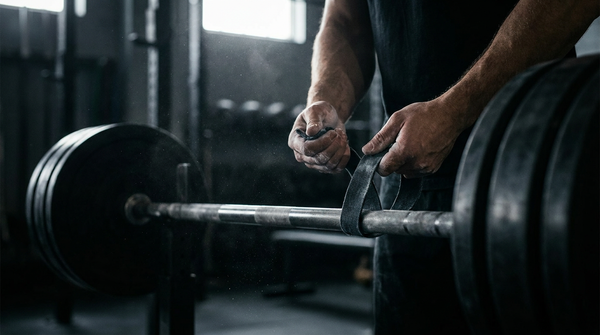
How to wrap for deadlifts: Loop the strap through the ring and slide your wrist in so the tail hangs down on the pinky side. Place the bar in the crook of your fingers, drape the strap tail over the bar away from you, then roll the bar toward you to wind the strap tight. Two to three wraps is plenty. Grip the bar normally on top of the wrapped strap. The bar should feel locked in, not hanging by threads.
When straps make sense: Top sets at 85% or above, volume sets of 5 or more reps where grip would normally fade on the last two reps, rack pulls, and deficit deadlifts. Warm-up sets under 70% should be done raw to keep your grip training honest.
2. Barbell Rows
Rows are one of the best back builders in existence. The problem is forearms often fail first, especially as the weight climbs. Straps keep the focus on your lats, traps, and rear delts where it belongs.
How to wrap for barbell rows: Same wrap technique as deadlifts. Because you're bent over and pulling toward your waist, the bar naturally wants to roll away from you, so roll the bar toward you to cinch the strap before you unrack. Keep the wrap snug but not so tight that you can't release quickly at the end of the set.
When straps make sense: Working sets of 4 or more reps with heavy loading. If you can hold 3 sets of 8 raw without your grip failing, you don't need them yet. Straps come in when grip is the first thing that goes.
3. Dumbbell Rows
Straps shine here more than almost anywhere else. When you're rowing a 120-pound dumbbell for sets of 10, the round handle with no knurling will punish your palm long before your lat reaches failure. Strap in and hit your back properly.
How to wrap for dumbbell rows: Loop around the dumbbell handle perpendicular to its length rather than rolling it. Wrap the tail around the handle two times and grip. Because dumbbell handles are shorter than a barbell, keep the wrap compact so it doesn't bunch up against the weight plates.
When straps make sense: Any working set where grip is the first limiter. This is especially common with hex dumbbells or rubber-coated handles that have less texture than a barbell.
4. Shrugs
Training traps takes volume and heavy weight. Barbell or dumbbell shrugs with serious loading will fry your grip in the first two sets, leaving you short on total trap stimulus. Straps solve this directly.
How to wrap for shrugs: Same as deadlifts for the barbell. With dumbbells, use the dumbbell wrap method above. One key detail for shrugs: make sure the strap wrap doesn't creep too far up your palm, because you need a straight wrist during the shrug movement. Keep the wrap centered over your wrist joint.
When straps make sense: Any working set above your raw grip limit. Shrug volume typically runs 3-5 sets of 8-15 reps, and grip usually fails well before trap fatigue on the heavier sets.
5. Rack Pulls
Rack pulls overload the top portion of the deadlift with more weight than you'd pull from the floor. Since the loading exceeds your full deadlift, straps are almost mandatory here. No one is rack pulling 110% of their max with a double overhand grip for sets.
When straps make sense: Every working set. This is a pure overload movement. Use straps from the start and focus on maximizing bar height, shoulder retraction, and lockout strength.
6. Heavy Hip Hinges (RDLs and Stiff-Leg Deadlifts)
RDLs and stiff-leg deadlifts done at meaningful weight place constant tension on your hamstrings and glutes throughout the set. Your grip is under load the entire time with no rest at the bottom. Straps keep the tension where you want it and let you focus on the stretch and contraction rather than squeezing the bar for survival.
When straps make sense: Sets of 6 or more reps with heavy loading. The continuous tension of RDLs is harder on grip than deadlifts where you reset each rep, so straps often become useful at slightly lower percentages.
Lifts Where You Should NOT Use Straps
Straps are not for every lift. Using them in the wrong places builds a dependency that limits your raw grip strength over time. Skip them on:
- Warm-up sets: Any set under about 70-75% of your working weight should be done raw. This is your grip training. Don't skip it.
- Bench press and overhead press: These are push movements, not pulls. Your grip is not the limiting factor, and straps won't help. Use wrist wraps if you need wrist support on pressing movements.
- Farmer's carries and loaded carries: The entire point is to build grip endurance and carry strength. Strapping up defeats the purpose entirely.
- Olympic lifts (clean, snatch): The bar needs to release at the catch. Strapped in, you cannot drop the bar safely. Train these raw.
- Pull-ups and chin-ups: Grip and forearm engagement is part of the movement pattern. Use straps here only for rehab purposes under specific guidance.
Pro Tips for Using Straps
- Save them for top sets. Warm up raw, strap up for heavy pulls. This keeps your grip developing alongside your strength.
- Pair with chalk for the best setup. Chalk on your hands before wrapping reduces strap slip and gives you a more secure connection to the bar.
- Wrap tight, not just snug. Loose straps shift during the lift and can reduce control. Roll the bar to cinch down before you pull.
- Use both hands evenly. Mismatched wrap tension on left and right will cause bar imbalance. Wind the same number of loops on each side.
- Check the strap position before each set. The strap should sit over the wrist, not riding up the forearm or slipping down into the palm.
FAQs
Should I use straps every time I deadlift?
No. Train your grip raw on warm-ups and moderate-weight sets. Strap up when grip is failing before your target muscles do.
Do straps weaken grip strength?
Only if you use them exclusively. Mix in raw grip training on warm-ups, lighter accessory work, and carries, and you'll stay balanced.
Are straps only for advanced lifters?
Not at all. Beginners can start using straps once their pulling strength has outpaced their grip strength, which sometimes happens within the first few months of serious training.
How tight should the strap be?
Tight enough that the bar doesn't rotate in the strap during the lift. If the bar is spinning freely, you need one more wrap. If your hand is going numb mid-set, back off one wrap.
Final Word
The best lifts to use lifting straps on are your big pulls: deadlifts, rows, shrugs, rack pulls, and heavy hip hinges. Wrap correctly for each movement, save the straps for your working sets, and keep training raw on everything else. That combination builds grip strength and total pulling strength at the same time, instead of sacrificing one for the other.