
Hybrid Training: Why It Works and How to Build Strength and Endurance

Hybrid training blends strength work with cardiovascular conditioning to create balanced, resilient fitness. You don’t have to choose between running and lifting, done well, you can build endurance, strength, and durability in the same week.
What Is Hybrid Training?
Hybrid training combines resistance training with aerobic or mixed-modality sessions, either within the same workout or across the week, to improve overall capacity. It emphasizes being good at everything that matters: move well, lift well, and last longer.
Key Benefits
- Complete fitness: Strength plus aerobic capacity for real-world readiness.
- Body composition: Preserve or build muscle while improving calorie expenditure.
- Resilience: Stronger tissues from lifting; better recovery and work capacity from cardio.
- Time efficiency: Blend stimuli in a single session or alternate days for faster progress.
How to Structure a Simple Hybrid Week
- Day 1: Strength (lower-body focus: squats, RDLs)
- Day 2: Zone-2 cardio (30-45 min run, ride, or row)
- Day 3: Strength (upper-body push/pull)
- Day 4: Mixed session (circuits/EMOM: carries, rows, band work)
- Day 5: Intervals (8-12 × 1 min hard / 1 min easy)
Adjust volume based on recovery. If fatigue rises, keep strength and cardio on separate days or split by AM/PM.
Sample Hybrid Session (30 Minutes)
- Warm-up: 5 minutes easy row or jog
- Strength block: Back squat 3 × 5 (2 minutes rest)
- Conditioning finisher: 8 minutes at a hard but sustainable row/run pace
- Cooldown: Light band work and breathing drills
Common Mistakes to Avoid
- Doing everything hard, every day: Alternate intensities; include easy days.
- Neglecting technique: Lift before cardio when in the same session to keep form sharp.
- Overusing high-intensity work: Most gains come from consistent strength work and steady cardio.
Essential Gear for Hybrid Training

Hanging Ab Straps
Train your core with back-friendly, hanging movements that build trunk strength for hybrid workouts.
Shop Ab Straps
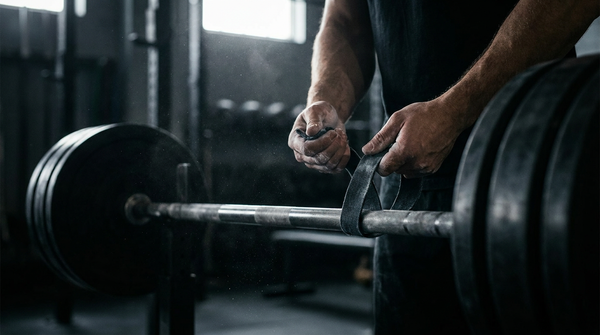
Weightlifting Straps
Lock in your grip for heavy pulls and rows so your back and hips, not your hands, determine the set.
Shop Lifting Straps
Battle Bands 3-Pack
Three levels of resistance for warm-ups, mobility, assistance, and conditioning, essential for hybrid athletes.
Shop Battle BandsHow to Manage Recovery in Hybrid Training
The biggest mistake hybrid athletes make is treating every session like a competition. You do not need to crush both your lifts and your run on the same day to make progress. Here is a practical recovery framework:
- Separate hard from hard: If you lift heavy in the morning, your afternoon cardio should be zone 2 (conversational pace), not intervals.
- Prioritize sleep: Hybrid training is more demanding than single-modality training. Eight hours is not a luxury, it is a requirement for adaptation.
- Eat to support the work: Many hybrid athletes undereat. If you are lifting and doing cardio in the same week, you need enough protein (aim for 0.7-1g per pound of bodyweight) and enough carbohydrates to fuel conditioning sessions.
- Schedule easy weeks: Every three to four weeks, reduce your training volume by 30-40%. This is when adaptation actually happens.
Progression: How to Get Better at Both
Hybrid training works best when you progress each quality independently. Do not try to increase your squat max and your 5k time simultaneously. Pick one as the primary focus for a six to eight week block, then shift emphasis. This is called undulating periodization, and it prevents the adaptation plateau that comes from trying to do everything at once.
A simple two-phase approach:
- Strength phase (8 weeks): 3-4 strength sessions per week, 2 cardio sessions at easy pace. Focus on progressive overload in the gym.
- Conditioning phase (8 weeks): 2-3 strength sessions per week (maintenance loads), 3-4 cardio sessions with structured intervals. Focus on improving work capacity and time.
Rotate between phases and you will find that strength built in phase one carries over to better performance in phase two, and cardio fitness from phase two accelerates recovery during phase one.
The Role of Loaded Carries and Functional Tools
Hybrid athletes benefit enormously from loaded carry work. Farmer carries, sandbag carries, and vest walks build the kind of full-body endurance that neither pure lifting nor pure cardio can replicate. These movements train grip, core, and cardiovascular system simultaneously, making them some of the most time-efficient exercises available.
Incorporating a weight vest into your walking or rucking sessions is one of the simplest ways to add training stimulus without learning new movements. Even 20-30 minutes of brisk walking with a loaded vest provides meaningful cardiovascular and muscular conditioning.
Frequently Asked Questions
Can I lift and run in the same week?
Yes. Keep hard sessions separated by at least 24 hours when possible, and adjust volume based on recovery.
Strength first or cardio first?
When combined in one session, lift first so technique stays sharp, then finish with conditioning. On split days, prioritize the day’s main goal.
How do I avoid overtraining?
Include one to two lower-intensity days per week, track sleep and resting heart rate, and reduce volume when fatigue persists.
Final Thoughts
Hybrid training is about dependable performance, strong, conditioned, and ready. Start with a simple weekly structure, progress slowly, and let recovery guide the dose. The right tools help you train smarter.