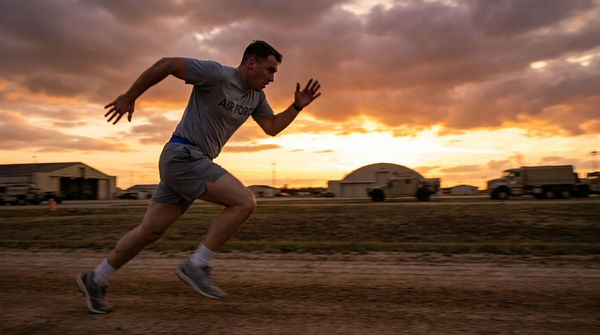

What Is Army RASP? Requirements, Standards, and How to Prepare

RASP, the Ranger Assessment and Selection Program, is how you earn a spot in the 75th Ranger Regiment. Whatever your job, the Regiment says, everyone goes through RASP. RASP 1 is eight weeks for privates through sergeants, RASP 2 is three weeks for senior NCOs and officers, and both happen at Fort Benning, Georgia. Here are the 2026 standards from the Regiment's own preparation guide, who goes to which course, and how to show up ready.
RASP at a glance
| RASP 1 | RASP 2 | |
|---|---|---|
| Who | Private through sergeant | Staff sergeant and above, warrant officers, and officers (first lieutenant, captain, major) |
| Length | 8 weeks: about 5 weeks of assessment, 3 weeks of skills training | 3 weeks |
| Where | Fort Benning, Georgia | Fort Benning, Georgia |
RASP 1 vs RASP 2
RASP 1 is the eight-week course for junior enlisted soldiers, private through sergeant, and it is what most people mean by RASP. Officers, warrant officers and senior NCOs from staff sergeant through command sergeant major attend RASP 2, a three-week course. GoArmy lists the officer ranks as first lieutenant, captain or major.
How RASP 1 is structured
- Phase 1, about five weeks of assessment: fitness testing, a swim in full uniform, a 5-mile run, a 12-mile ruck march with a 35-pound dry rucksack, land navigation, medical first responder tests and a psychological screening. Combatives are part of it too; candidates in 2025 were tested on the clinch drill.
- Phase 2, about three weeks of skills training: direct action, airfield seizure, personnel recovery, marksmanship and explosives.
Soldiers who pass RASP go directly to Airborne School.
RASP standards in 2026
The 75th Ranger Regiment's RASP Preparation Guide (December 2025) lists the tests and gives both the minimum and the goal. The Ranger Fitness Test standard is the same regardless of age and gender.
| Test | Standard | Goal |
|---|---|---|
| Ranger Fitness Test (RFT) | 41 hand-release push-ups, 2:35 plank, 5-mile run in under 40 minutes, 6 chin-ups | 52 push-ups, 3:20 plank, 35:50 run, 14 pull-ups |
| Army Fitness Test (AFT) | Army standards | 463 total: 315 lb deadlift, 54 push-ups, 1:34 sprint-drag-carry, 3:23 plank, 13:49 2-mile run |
| Ranger Physical Assessment Test (RPAT) | Under 40 minutes | 31:56 |
| 12-mile foot march | Under 3 hours with 35 lb dry, weapon and helmet | 2:31:33 |
The RPAT is done in combat uniform with boots, helmet and body armor: a 2-mile run, a 20-foot rope climb, dragging a 185-pound SKEDCO 100 yards, climbing a 20-foot caving ladder, a 100-yard sprint, an 8-foot wall and a 1-mile run. There is also a swim in full uniform, which the Army calls the Ranger Swim Ability Evaluation.
GoArmy's own list of pre-RASP events reads slightly differently, with a 2-mile run, pull-ups and a 6-mile ruck march and no times. Train to the Regiment's guide: it is the more demanding standard and the one written by the unit running selection. Gauge where you are with our RASP calculator.
Who can go to RASP
- Active duty only. GoArmy says you must be on active duty in the U.S. Army.
- Test scores. GoArmy lists an ASVAB TECH score of 105 or above; the Regiment's site lists a GT score of 100 or higher, with waivers case by case. Check with your recruiter.
- Fitness and body composition. Pass the Army Fitness Test and meet the Army's waist-to-height ratio standard.
- Women are welcome. The Regiment says female applicants are encouraged to apply.
- Timing. You may get a RASP date in as little as a month or wait up to eight months.
How hard is RASP?
The Regiment does not publish a pass rate. A 2025 study in Military Psychology describes attrition at selection courses like this as often above 50 percent. The candidates who make it arrive well above the minimums, which is why the Regiment's guide gives a goal for every test.
How to prepare
The Regiment's prep guide is an 8-week plan built to improve your Ranger Fitness Test, your aerobic base and your work capacity:
- Monday, Wednesday, Friday: run first, then push-up, plank and chin-up or pull-up work.
- Tuesday, Thursday: work-capacity circuits.
- Twice in 8 weeks: a diagnostic Ranger Fitness Test to track progress.
- Loaded walking, once a week at most: 25 to 35 pounds of dry weight, building toward 35 to 40, for 4 to 6 miles, with the load high and close to your body. If you have no ruck or backpack, the guide says a weight vest can be used.
- Extra cardio: if needed, up to two low-impact Zone 2 sessions of 30 to 60 minutes a week, plus a weekly recovery session.
When the 8 weeks are done and you need more ruck volume, our RASP 12-mile ruck progression builds toward the 3-hour standard. Get the full guide from the Regiment: RASP Preparation Guide.

Hybrid Weight Vest MK2
The Regiment's own prep guide says a weight vest works for loaded walking when you have no ruck. The Hybrid Weight Vest MK2 keeps the load high and close to your body, the way the guide recommends.
Shop now →RASP vs Ranger School vs SFAS
RASP is selection into the 75th Ranger Regiment. Ranger School is a separate leadership course that awards the Ranger Tab; read our Ranger School guide. SFAS selects soldiers for the Special Forces, a different pipeline with a different mission; see our SFAS vs RASP breakdown and the SFAS calculator.
Sources: 75th Ranger Regiment, Career Path; 75th Ranger Regiment, RASP Preparation Guide (December 2025); GoArmy, Army Rangers; Army.mil, 75th Ranger Regiment; Military Psychology, 2025. Standards change; confirm current requirements with your recruiter or chain of command.
Frequently Asked Questions
What is RASP in the Army?
RASP is the Ranger Assessment and Selection Program, the course every soldier goes through to join the 75th Ranger Regiment, whatever their job. It is held at Fort Benning, Georgia.
How long is RASP?
RASP 1, for privates through sergeants, is eight weeks: about five weeks of assessment and three weeks of skills training. RASP 2, for staff sergeants and above, warrant officers and officers, is three weeks.
What are the RASP physical standards?
The Ranger Fitness Test: 41 hand-release push-ups, a 2:35 plank, a 5-mile run in under 40 minutes and 6 chin-ups. Candidates also face a swim in uniform, the Ranger Physical Assessment Test in under 40 minutes, and a 12-mile ruck with 35 pounds in under 3 hours.
What is the difference between RASP 1 and RASP 2?
RASP 1 is the eight-week course for junior enlisted soldiers, private through sergeant. RASP 2 is a three-week course for senior NCOs from staff sergeant up, warrant officers, and officers in the ranks of first lieutenant, captain or major.
Can women go to RASP?
Yes. The 75th Ranger Regiment says female applicants are encouraged to apply.
Can National Guard or Reserve soldiers attend RASP?
No. GoArmy says you must be on active duty in the U.S. Army to attend.