
Wrist Support for Lifting: How to Fix Wrist Pain in the Gym

Wrist pain is one of the most common reasons lifters skip pressing days. The good news: most gym wrist pain is not an injury, it is a position problem. The bar sits wrong, the wrist bends where it should stack, and a joint built for mobility gets asked to do a job built for structure. Here is how to find the cause, fix it, and use wrist support the right way while you do.
Why wrists hurt when you lift
Four causes account for almost all of it. First, a bent wrist under load: the bar drifts toward your fingers on bench or overhead press, the wrist extends backward, and all the force crosses the joint at an angle. Second, grip width or bar path that does not match your build. Third, a sudden spike in pressing volume that outruns what the small tissues of the wrist can recover from. Fourth, poor wrist mobility, especially in front rack and false grip positions, which forces the joint to its end range every rep.
Fix the position first
Stack the bar over the forearm bones. On bench and overhead press, the bar should sit low in the palm, on the heel of the hand, with knuckles pointing mostly up, not back. Squeeze the bar hard: a tight grip stiffens the whole forearm and keeps the wrist from drifting. If front squats light your wrists up, widen your grip a finger or two, or use a two-finger grip while your mobility catches up.
Where wrist wraps fit
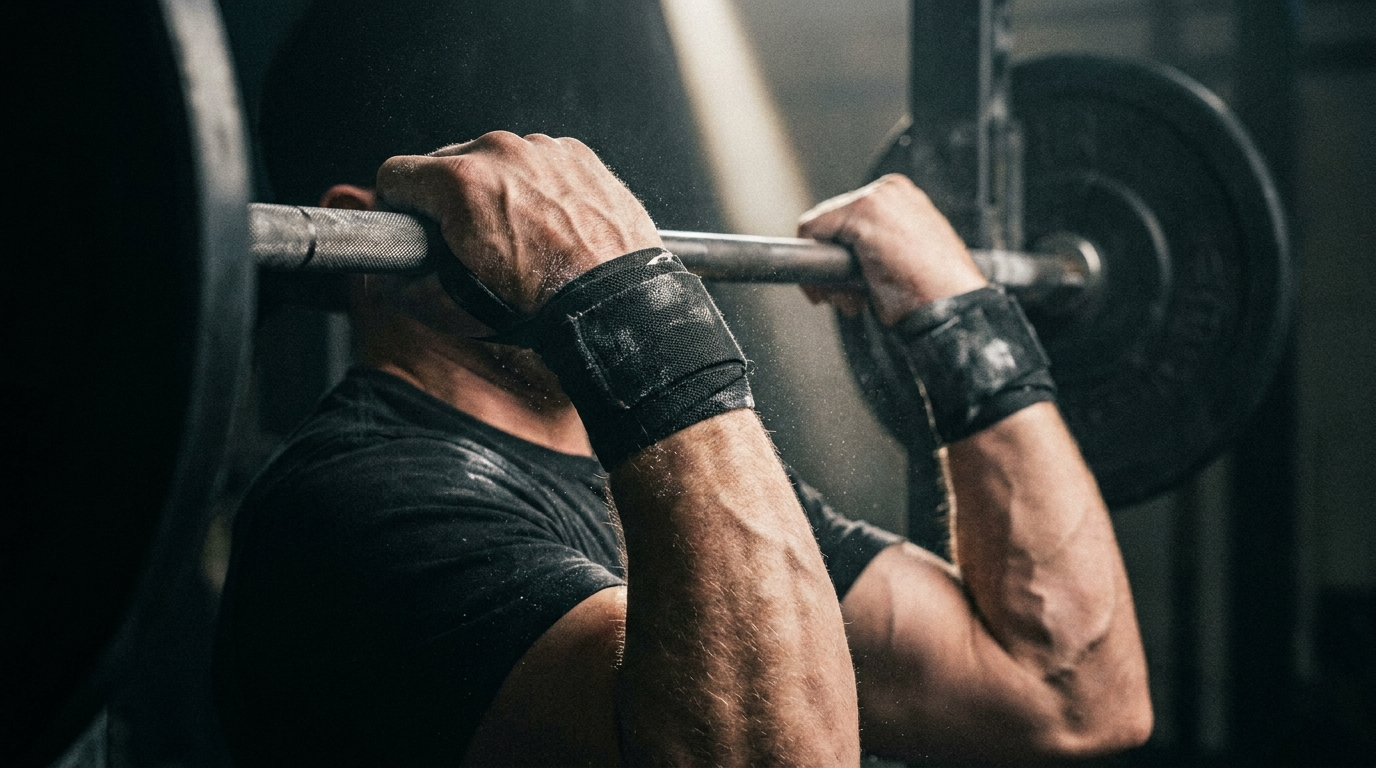
Once your position is right, wraps are the support layer for the heavy work. A properly wrapped wrist physically cannot collapse into painful extension, which lets you press heavy while irritated tissue calms down and keeps loading pain-free as you rebuild. Wear them for your heavy pressing sets, take them off between sets, and keep training your wrists bare at lighter loads so the joint keeps adapting. Full technique is in our guide on how to use wrist wraps.
One honest warning: wraps are not a license to press through sharp pain. They manage load on a healthy or mildly irritated joint. They do not fix an injury.

Push Pull Bundle
Wrist Wraps + Lifting Straps Bundle
Elastic Battle Wraps keep the wrist stacked on every heavy press, and padded Battle Straps take the strain off pull day. Both for $24.97.
Shop now →Build wrists that do not need babying
Support gets you through today. Stronger wrists and forearms solve the problem for good. Add two short sessions a week: wrist curls and extensions with light dumbbells, farmer carries, dead hangs, and fingertip push-up holds. Grip work carries over directly, and our grip strength guide lays out the full progression. For mobility, spend two minutes before pressing on wrist circles, palm-down stretches, and loaded rocking on all fours. If you need the support gear to bridge the gap while you build that base, you will find it in our lifting straps and wrist wraps collection.
When to get it checked
Sharp localized pain, swelling, numbness or tingling in the fingers, pain at rest, or symptoms lasting more than two to three weeks despite modified training are signals to see a sports medicine professional rather than train through it. This article is general training information, not medical advice.
Frequently asked questions
Should I keep lifting with wrist pain?
Mild, position-related discomfort usually resolves with the fixes above, and you can keep training around it with pain-free movements. Sharp or worsening pain means back off and get it evaluated.
Do wrist wraps help with wrist pain?
Yes, when the pain comes from the wrist bending under load. Wraps block that extension so you can press without the painful position. They will not help pain caused by injury, and they work best combined with the technique fixes, not instead of them.
How do I strengthen my wrists for lifting?
Direct forearm work two times per week: wrist curls, reverse wrist curls, farmer carries, and dead hangs. Progress slowly, the tissues are small and adapt slower than your pressing muscles.
Wrist wraps or wrist straps for support?
Wraps support the joint for pressing. Lifting straps attach your hand to the bar for pulling and do nothing for wrist support. Our lifting straps vs wrist wraps guide covers the difference.
Related reading
More on wrist gear and pressing: how to choose the best wrist wraps, how to use wrist wraps, and wrist wraps for hybrid training.