
Wrist Straps for Lifting: What They Do, When to Use Them, and How to Wrap

Wrist straps are a training tool that most lifters ignore until their wrists start complaining. They wrap around your wrist joint to provide support and stability during heavy pressing and overhead movements, and they make a significant difference when you are pushing serious weight. If you have ever felt your wrist bend back under load during a heavy bench press, or noticed wrist discomfort creeping in on overhead work, wrist straps address that directly.
This guide covers what wrist straps do, how they differ from lifting straps, when to use them, how to wrap them, and what to look for when you are buying a pair.
What Wrist Straps Do
The wrist is not a particularly stable joint under heavy loads. When you press a barbell overhead or bench press near your max, the weight can drive your wrist into extension, putting stress on the small bones and tendons of the joint. Over time, repeated wrist extension under load can cause pain, tendinitis, or overuse injuries that sideline you for weeks.
Wrist straps, also called wrist wraps, limit that extension. They wrap tightly around the joint and act as an external stabilizer, keeping your wrist in a more neutral position through the full range of the movement. The result is a more stable pressing surface and reduced strain on the joint itself.
Secondary benefits include better force transfer. When your wrist is wobbly, some of the energy from your legs, hips, and chest leaks out through the instability. A locked wrist transmits force more efficiently from your body into the bar.
Wrist Straps vs Lifting Straps: Not the Same Thing
This confuses a lot of people, including experienced lifters. The names are similar. The function is completely different.
Wrist straps (wrist wraps) stabilize the wrist joint. They are for pressing movements: bench press, overhead press, push press, floor press. They do not help you hold a bar. They protect and support the joint itself.
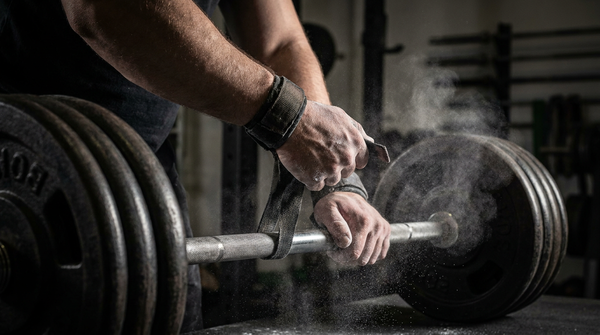
Lifting straps attach to the bar and increase your grip capacity on pulling movements: deadlifts, rows, shrugs. They do not stabilize your wrist joint. They offload grip fatigue so your back and legs can work to their capacity.
If you are deadlifting, you want lifting straps. If you are benching or pressing overhead, you want wrist wraps. If you train both, you need both. The Lifting Straps and Wrist Wraps Bundle covers both at a better price than buying them separately.
When to Use Wrist Straps
Not every pressing session needs wrist straps. Use them strategically.
Good times to use wrist straps:
- Working above 80 percent of your max on bench press or overhead press
- During any pressing movement where you feel wrist instability or discomfort
- When you are fatigued and your wrist positioning breaks down late in a session
- During heavy push press or jerks where the catch position stresses the wrist
- If you are coming back from a wrist injury and want extra support during loading
When to skip wrist straps:
- Warm-up sets and lighter working sets where wrist stability is not an issue
- Movements where wrist position should be actively trained, like dumbbell work at lower loads
- Movements that do not stress the wrist in extension, like pull-ups or rows
Just like lifting straps for pulling work, the goal is to use wrist straps to extend your training quality on heavy sets, not to use them as a substitute for developing joint stability over time.
How to Wrap Wrist Straps Correctly
Getting the wrap right makes the difference between useful support and a useless piece of fabric around your wrist.
- Start with the loop around your thumb to anchor the strap
- Wrap the strap around your wrist, covering the joint itself, not your palm or your forearm
- Keep tension consistent as you wrap, no loose sections
- The strap should cross directly over the wrist joint, centered between your palm and your forearm
- Fasten the velcro snugly. Tight enough to feel supported but not so tight that you lose circulation
- Make a fist and flex your wrist slightly. You should feel resistance to extension. That is the support working
Longer wraps allow more passes around the wrist and give more support. For max effort pressing, a stiffer, longer wrap is better. For moderate work and general training, a shorter, more flexible wrap keeps your wrist mobile enough to adjust your position naturally.
Wrist Strap Stiffness: Flexible vs Stiff
Wrist straps come in different stiffness levels, and the right one depends on what you are training for.
Flexible wraps are made from a softer, more elastic material. They provide moderate support and are comfortable for longer sessions. Good for general strength training, moderate pressing loads, and anyone new to using wrist wraps.
Stiff wraps are made from thicker, denser material that limits range of motion more significantly. They give more rigid support and are better suited to maximum effort bench pressing and heavy overhead work. The tradeoff is less natural wrist movement, which can feel restrictive if you are not used to them.
For most general training, a medium-stiffness wrap is the right starting point. Specialized powerlifters or Olympic lifters may want stiffer options for competition.
The Best Pressing Movements for Wrist Straps
Barbell Bench Press: The most common application. Heavy bench press puts the wrist in extension under load. Wraps keep the joint neutral and stable, especially at max effort.
Overhead Press: Standing overhead press demands wrist stability through the full range of the movement, from the front rack position to lockout. Wraps make a noticeable difference on heavy sets.
Push Press and Jerk: The drive phase and catch position both stress the wrist. Wraps reduce the risk of joint irritation on high-volume Olympic-style work.
Incline and Decline Press: Angle variations on the bench press change where the load lands on your wrist. Wraps keep you stable across all pressing angles.
Dumbbell Pressing Variations: Less common because dumbbells allow natural wrist movement. But on heavy dumbbell presses where your wrist starts to buckle, wraps help.
Wrist Straps for Hybrid Athletes and Military Fitness
Hybrid training often means pressing under fatigue. If you are doing overhead work after a heavy conditioning block, your stabilizers are already taxed. Wrist straps give you the support to maintain technique and training quality when your joints are tired but the workout is not done.
The Battle Wraps are built for this kind of session. They wrap and secure cleanly without fussing with them between sets, which matters when you are moving through a training circuit rather than sitting between slow powerlifting sets. They also hold up to sweat and repeated washing, which is a non-negotiable for gear that sees daily use.
Do Wrist Straps Weaken Your Wrists?
The same concern that comes up with lifting straps. The answer is similar: only if you use them on every single set without also training the joint through its natural range. If you use wrist wraps on your heavy sets and do lighter work without them, your wrists will develop alongside your pressing strength. The wraps protect the joint at loads that are genuinely risky. Lighter loads build natural stability over time.
A practical approach: use wraps on your top sets of bench and overhead press. Take them off for accessories and lighter work. Keep both in your bag and use them as the movement demands.
What to Look for When Buying Wrist Straps
- Length: Longer wraps (18-24 inches) give more passes and more support. Shorter wraps are more flexible and easier to use. Start with a medium length if you are unsure.
- Material: Cotton holds shape well and is durable. Elastic-cotton blends are more flexible. Pure elastic gives the least support.
- Velcro quality: The velcro needs to hold under load without peeling back mid-set. Cheap velcro is the first thing to fail on inexpensive wraps.
- Thumb loop: A built-in thumb loop anchors the wrap while you apply it and keeps it from sliding. This is a basic feature that should be on every pair.
- Washing durability: Wraps get sweaty. They need to survive regular washing without losing their structure or velcro grip.
Putting It Together
Wrist straps are not complicated gear. They are a straightforward solution to a real problem: wrist instability under heavy pressing loads. Use them on your heavy sets, leave them off when you do not need them, and keep your overall wrist health in mind by also including wrist mobility work in your training.
If you are training with serious intent across both pressing and pulling movements, the Lifting Straps and Wrist Wraps Bundle gives you both tools at a price that makes sense. Your wrists will thank you on bench day, and your back will thank you on deadlift day.