
Hybrid Lifting Belt: What It Is and Why It Works

If you have been searching for a hybrid lifting belt, you are probably trying to figure out whether it is actually better than a standard lever or prong belt, or just another piece of gear with a fancy name. It is a fair question. Here is a straight answer.
What Is a Hybrid Lifting Belt?
A hybrid lifting belt uses a self-locking buckle or lever mechanism that combines the quick release of a lever belt with the adjustability of a prong belt. Most standard lever belts lock into one fixed position. If your waist size changes or you need to adjust tension between lifts, you are out of luck without a screwdriver. A prong belt is adjustable but can be slow to tighten mid-session.
A hybrid design solves both problems. You get secure, repeatable tension on every set, and you can adjust the fit without tools. For athletes moving between heavy squats, deadlifts, and conditioning work in the same training session, that flexibility matters.
The Battle Bunker Hybrid Belt uses a self-locking mechanism that lets you dial in the exact tension you need and release it fast between sets. No fumbling with a screwdriver, no loose prong rattling around while you move between stations.
Hybrid Belt vs Lever Belt vs Prong Belt
Here is how they break down:
Lever belt locks tight at one setting. Great for powerlifters who never change belt position. Not ideal if you train across multiple movements or your weight fluctuates.
Prong belt is adjustable and durable, but slower to put on and remove. Tension can vary slightly if you are rushing between sets.
Hybrid belt combines a fast, secure lock with adjustability. Best for hybrid athletes, CrossFit-style training, or anyone doing strength work alongside conditioning. You are not sacrificing tightness for convenience or vice versa.
If your training is one-dimensional, like pure powerlifting at the same weight every session, a lever belt works fine. If you train like a hybrid athlete across strength, conditioning, and everything in between, a hybrid belt is the more practical tool.
Who Should Use a Hybrid Lifting Belt
A hybrid lifting belt makes sense if you:
- Deadlift and squat in the same session and need consistent support for both
- Do circuit-style strength training where you need to put the belt on and off quickly
- Train at different body weights throughout the year and need adjustability
- Compete in hybrid events like HYROX where you move between loaded carries and strength stations
- Want a belt that does not require tools to adjust the fit
If you are just starting out with belt training, a hybrid belt also makes learning easier. You can experiment with different tension levels and find the fit that cues your brace properly, without committing to a fixed position.
How to Use a Lifting Belt for Deadlifts and Squats
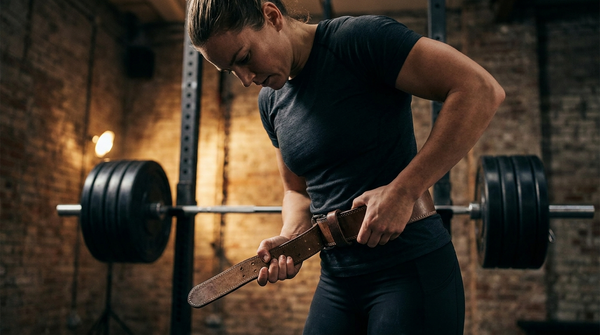
A belt does one job: give your core something to brace against. It does not do the bracing for you. Here is the basic setup:
Position the belt around your waist, covering your lower back and the tops of your hips. For deadlifts, some lifters prefer slightly lower. For squats, slightly higher. Experiment to find what allows full depth without the belt digging into your hips.
Tension should be tight enough that you feel resistance when you take a big breath and push your belly out. Not so tight that you cannot breathe. The goal is intra-abdominal pressure. Your breath and braced core create the pressure; the belt gives it somewhere to go.
Bracing sequence: big breath in (360 degrees, not just chest), brace hard before you pull or squat, hold through the sticking point, exhale at the top.
When to belt up: working sets at 80% of max effort and above. Most athletes do not need a belt for warm-up sets or submaximal work. Save it for the sets that require maximum stability.
For a full breakdown on belt placement and bracing, see the Battle Bunker guide to using a lifting belt.
Hybrid Belt Width and Thickness
Most serious lifting belts are 4 inches wide and 10mm thick. These are standard dimensions for strength work. A thinner or narrower belt will feel less supportive under heavy load.
Some athletes prefer a 3-inch belt for Olympic lifting or movements requiring more torso movement. For deadlifts and squats, 4 inches gives you more surface area to brace against.
Leather vs nylon comes down to preference. Leather is stiffer and takes time to break in. Nylon is flexible from day one and works well for athletes doing varied movements. The Battle Bunker Hybrid Belt uses reinforced material that gives you support without the stiff break-in period of entry-level leather belts.
Common Mistakes with Lifting Belts
Wearing it too loose. If you can slide two or three fingers under the belt without effort, it is not tight enough to do anything useful. You want snug. If it feels uncomfortable before you brace, loosen it one notch.
Using it as a crutch. The belt does not fix poor bracing mechanics. If you have lower back issues from bad technique, a belt can mask the problem temporarily. Build your brace first, then add the belt for max effort sets.
Using it for every set. Keep some training beltless to build raw core stability. The belt is a performance tool for heavy work, not a daily dependency.
Wearing it too high or too low. The belt should cover your lower back fully. If it is riding up to your ribs or sitting on your hips, reposition it before you pull.
Pairing a Lifting Belt with Other Gear
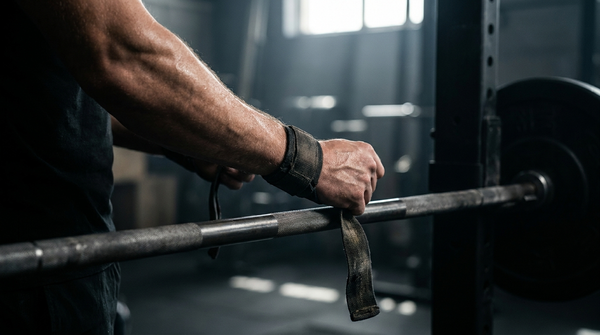
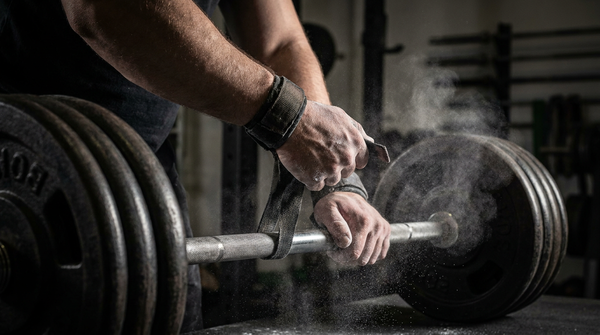
For heavy pulling work, most athletes pair a belt with lifting straps to take grip out of the equation. On pressing days, wrist wraps add joint stability during bench press and overhead press. The Battle Bunker Strength Bundle puts all three together if you want to set up your entire strength gear at once.
The Bottom Line
A hybrid lifting belt is a practical upgrade over standard lever or prong designs if your training involves multiple movements, varies in intensity, or requires quick transitions. The key features to look for are secure, repeatable lock tension and tool-free adjustability.
If you are training seriously and want gear that keeps up with a full training session rather than just one movement pattern, it is worth the investment. Check out the Battle Bunker Hybrid Belt and see how it fits into your setup.