
Air Force Combat Controller (CCT): Selection, Pipeline, and How to Prepare

Combat Controllers are one of the least understood jobs in special operations. Ask most people what a CCT does and you will get a blank stare, yet these airmen deploy alongside SEAL platoons and Special Forces teams, control airstrikes, and can turn a dirt strip into a functioning runway. This guide covers what the job actually is, the fitness standards that gate entry, how Special Warfare Assessment and Selection works, and how to build the kind of fitness the pipeline demands.
What Is an Air Force Combat Controller?
A Combat Controller is an Air Force special operations airman certified as an air traffic controller. The motto, First There, describes the mission: infiltrate ahead of a larger force, survey and establish assault zones or airfields, and control the aircraft moving through them. CCTs also deliver precision terminal attack guidance, meaning they direct close air support onto targets in combat.
Because ground special operations teams rarely have their own airpower expertise, CCTs are attached to SEAL, Special Forces, and Ranger elements as the air to ground link. Graduates wear the scarlet beret, one of the most selective badges in the Air Force.
Combat Controller vs TACP vs Pararescue
Air Force Special Warfare includes several career fields that get mixed up constantly. TACPs align mainly with conventional Army units to control close air support. Pararescuemen are rescue and trauma medicine specialists; we cover them in our guide to Air Force Pararescue. Combat Controllers are the air traffic control and strike integration specialists for special operations. All of them funnel through the same front door: the Initial Fitness Test and Special Warfare Assessment and Selection.
The Entry Standard: IFT Minimums
The Initial Fitness Test, which replaced the old PAST, is the qualifying test for Air Force Special Warfare candidates. These are the published minimums; competitive applicants beat them by a wide margin:
| Event | Minimum |
|---|---|
| Pull-ups (2 min) | 8 |
| Sit-ups (2 min) | 50 |
| Push-ups (2 min) | 40 |
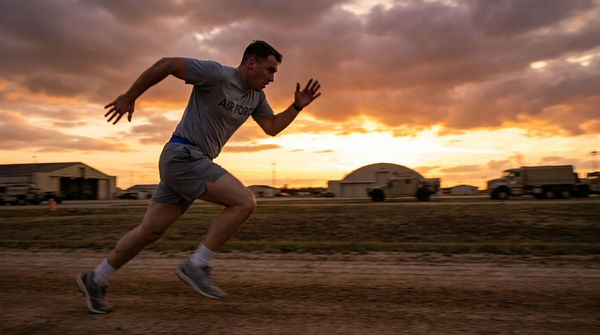
| 1.5 mile run | 10:20 |
| 2 x 25 m underwater swim | Pass/fail |
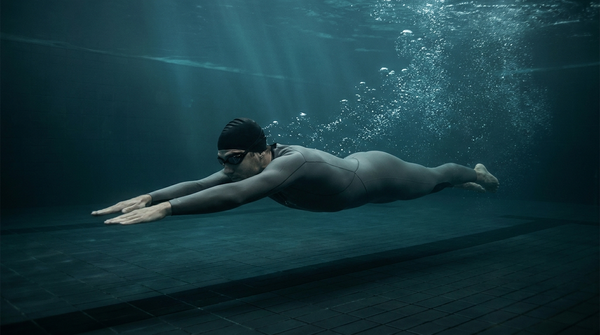
| 500 m surface swim | 15:00 |
That 15:00 swim is the standard for new enlistees, who all enter as Basic Special Warfare Airmen (9T5). Guard, Reserve, prior service, and retraining candidates for PJ, CCT, TACP, and SR must finish the 500 m in 12:30. Source: the official IFT worksheet dated 10 Jan 2023.
The whole test is taken as one continuous evaluation, and failing a single event fails the test. Score yourself honestly with the free Air Force PAST/IFT calculator before you talk to a recruiter, and if the underwaters scare you, start with our guide to surviving the underwater test without panicking.
Special Warfare Assessment and Selection
After basic military training and the Special Warfare candidate preparation block, candidates face Special Warfare Assessment and Selection at Lackland Air Force Base, a four week course that decides who continues into a Special Warfare pipeline. Expect high volume calisthenics, ruck marches, pool confidence work, and team events under fatigue. There is no published graduation PT score; cadre select candidates on performance, trainability, and character across the whole course.

The CCT Pipeline After Selection
Selection is only the entry gate. The full Combat Controller pipeline runs roughly two years and historically washes out most of the candidates who start it. Along the way, trainees complete air traffic control certification to FAA standards, Army Airborne, survival and evasion training, and the Combat Control schoolhouse where the tactical trade is taught, followed by advanced skills training that adds capabilities like military free fall and combat diving.
Two years is a long time to hold a high physical standard. The candidates who make it treat training like a job: consistent volume, few injuries, and no ego lifting. That mindset starts before you ever ship.
How to Train for the IFT and SWAS
Build your week around four things: run volume with some speed work for the 1.5 mile, swim technique and breath control, calisthenics density (pull-ups, push-ups, sit-ups on short rest), and rucking to prepare your legs and back for selection itself.
Pull-ups are the event that stalls most applicants. Eight is the floor, and strong candidates arrive repping sets of 15 or more. If you are stuck in single digits, follow our pull-up progression for military selection, and use bands to add clean assisted volume without trashing your elbows.

Build your pull-ups
3-Pack Battle Bands (10 to 125 lb)
Three resistance levels for assisted pull-ups, band rows, and push-up overload, the exact tools for building IFT numbers at home. $39.
Shop now →One more note on the run: pace discipline beats heroics. A 10:20 minimum means holding roughly 6:53 per mile. Train at intervals faster than that pace so test day feels controlled, and confirm your current Air Force fitness scores with the Air Force PT test calculator.
Frequently Asked Questions
What does a Combat Controller do?
CCTs deploy with special operations teams to establish and control assault zones and airfields, manage air traffic in austere environments, and direct close air support. They are FAA certified air traffic controllers with special operations tactical training.
How long is Combat Controller training?
From basic training to an operational team, plan on roughly two years, including selection, air traffic control certification, the Combat Control schoolhouse, and advanced skills training.
Is Combat Controller harder than Pararescue?
They share the same entry test and selection course, and both pipelines are long and unforgiving. The honest answer is that they are hard in different ways: the CCT pipeline layers a demanding academic ATC certification on top of the physical standard, while the PJ pipeline layers paramedic training. Choose by mission, not by difficulty rankings.
What score do I need on the IFT?
The minimums are 8 pull-ups, 50 sit-ups, 40 push-ups, a 10:20 1.5 mile run, two 25 meter underwaters, and a 500 meter swim in 15:00 (12:30 for prior service, Guard, Reserve, and retrainees). Treat those as the price of entry and aim well above them. The military PT calculators can help you benchmark every event.