
What Is MARSOC? Marine Raider Selection and Training Explained

MARSOC sits in an unusual spot in the special operations world. It is one of the youngest components of U.S. Special Operations Command, it belongs to a service that resisted creating it for decades, and its operators, the Marine Raiders, carry a name that goes back to World War II. If you are a Marine thinking about Assessment and Selection, or a future Marine mapping a path toward special operations, this guide covers what MARSOC is, what Raiders actually do, the entry benchmarks, and how the training pipeline works.
What Is MARSOC?
MARSOC stands for Marine Forces Special Operations Command. Established in 2006 and headquartered at Camp Lejeune, North Carolina, it is the Marine Corps component of U.S. Special Operations Command. Its operators are called Marine Raiders, a lineage borrowed from the Raider battalions of World War II, and its core unit is the Marine Raider Regiment.
Enlisted Raiders hold the 0372 Critical Skills Operator MOS. Getting there requires passing a two phase Assessment and Selection process and then completing the Individual Training Course, a roughly nine month program that turns selected Marines into special operators.
What Do Marine Raiders Do?
Raider teams deploy on the classic special operations mission set: direct action raids, special reconnaissance, foreign internal defense (training and advising partner forces overseas), counterterrorism, and unconventional warfare. The foreign internal defense mission is a large part of daily life. Raiders spend much of their careers embedded with partner militaries, which is why MARSOC screens hard for maturity, judgment, and the ability to operate in small teams far from support.
That screening philosophy matters for how you train. MARSOC famously looks for the "whole Marine": fitness gets you through the door, but problem solving under fatigue is what gets you selected.
MARSOC Requirements: The Entry Benchmarks
To attempt Assessment and Selection you must be a Marine first. There is no street to Raider pipeline; candidates come from the fleet. The published physical benchmarks for A&S candidates look like this:
| Benchmark | Standard |
|---|---|
| PFT score | 225 minimum on arrival, 260 or higher strongly recommended |
| Swim | 300 meter continuous swim in utility blouse and trousers |
| Tread | 10 minutes treading water in utilities, unassisted |
| Survival float | 5 minutes using blouse or trousers for flotation |
Treat the 225 as a floor, not a target. Candidates who show up at the recommended 260 plus level have far more margin when sleep deprivation and rucking volume start stacking up. If you have not scored a full PFT recently, run your numbers through our free USMC PFT and CFT calculator to see exactly where you stand and which events are costing you points.
Assessment and Selection: Two Phases
A&S is run in two phases, each about three weeks long. Phase one is a screening and preparation block built around calisthenics, rucking, swimming, and water confidence, with performance tracked against standards MARSOC does not publish. Phase two is the selection event itself: long movements under load, land navigation, team problem solving events, and constant evaluation by cadre who are watching how you think and how you treat your teammates when you are smoked.
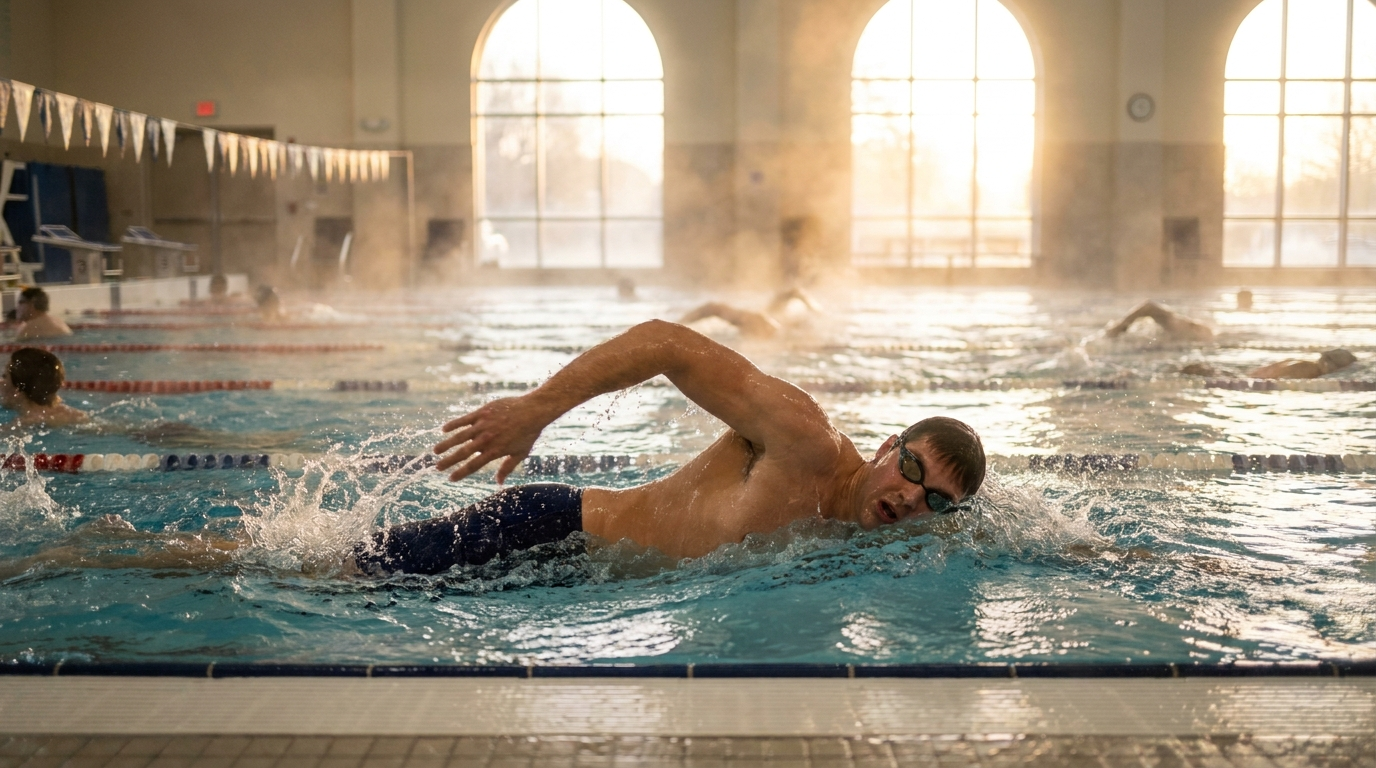
The water work deserves respect. Marines who are strong on land routinely struggle with the utilities swim and tread because they never train them. If pool access is limited, prioritize two focused sessions a week over occasional long ones, and practice the survival float before you need it.
The Individual Training Course
Selection is an invitation, not a finish line. Marines who are selected at A&S move on to the Individual Training Course at Camp Lejeune, a roughly nine month schoolhouse that covers small unit tactics, amphibious operations, communications, fires, irregular warfare, and a heavy dose of field exercises that string those skills together. Graduates earn the Critical Skills Operator MOS and join a Marine Raider battalion.
The practical takeaway for candidates: your body has to survive more than a selection event. It has to hold up through the better part of a year of high volume training. Durability work, not hero workouts, is what carries Marines through ITC.
How to Train for A&S
The A&S formula is not complicated: rucking under load, running volume, calisthenics density, swimming, and grip and trunk strength for the endless sandbag and log work. A simple weekly frame looks like two rucks (one heavy and slow, one moderate and fast), three runs, two swim sessions, and three strength sessions built around carries, squats, hinges, and pulling.
Loaded carries are the closest thing to a cheat code for selection prep. A heavy sandbag trains the exact grip, trunk, and shoulder endurance that A&S events punish, and it does it without beating up your spine the way a barbell can. Our full body sandbag training plan is a ready made template, and you can test where your grip stands with the free grip strength calculator.

Built for selection prep
The Raider Sandbag Kit (60 to 80 lb)
A heavy duty training sandbag sized for the carries, drags, and get ups that selection courses are built on. Made in the USA. $139.97.
Shop now →MARSOC vs Marine Recon
Marines often weigh MARSOC against Reconnaissance. The short version: Recon is a Marine Corps asset that supports the Marine Air Ground Task Force with reconnaissance and surveillance, while MARSOC is a SOCOM asset with a broader special operations mission set and its own selection and schoolhouse. Recon has its own screening and pipeline, which we break down in our guide to Marine Recon requirements. Many Raiders come from Recon, but it is not a prerequisite.
If you are comparing selection courses across services, our breakdown of Army SFAS shows how the Army's version of the same gate differs.
Frequently Asked Questions
What does MARSOC stand for?
Marine Forces Special Operations Command. It is the Marine Corps component of U.S. Special Operations Command, and its operators are called Marine Raiders.
Is MARSOC Tier 1?
No. The informal "tier" labels refer to units under Joint Special Operations Command. MARSOC is a theater level special operations force, comparable in role to Army Special Forces groups or Navy SEAL teams rather than to JSOC units.
How long is MARSOC training?
Plan on roughly a year from the start of Assessment and Selection to graduation: two A&S phases of about three weeks each, plus the nine month Individual Training Course, with administrative time in between.
How do I join MARSOC?
Become a Marine, perform well in the fleet, meet the screening benchmarks including the 225 PFT minimum, and submit a package to attend A&S. Recruiting briefs and screening events are run regularly at major Marine installations. Use the military PT calculators to track your scores while you build your package.