
Bodyweight Workout No Equipment: Build Strength Anywhere with Battle Bunker

Whether you're at home, traveling, or just want to train without touching a gym, a bodyweight workout no equipment routine is one of the most practical approaches to fitness there is. No machines, no barbells, no commute. Just your body and a plan. This guide covers effective training programs, workout structures, and the habits that make bodyweight training stick long-term.
Why Bodyweight Training Works
The case for bodyweight training is simple: it's accessible, scalable, and effective. You can build real functional strength without a single piece of equipment, which makes it a reliable option for anyone who travels frequently, prefers training at home, or wants a no-excuses backup when the gym isn't available.
- Train anywhere: No gym membership or equipment required.
- Functional strength: Movements mirror real-world demands: pushing, pulling, hinging, squatting, carrying yourself.
- Mobility and balance: Bodyweight training builds spatial awareness and joint health.
- Scalable: Adjust difficulty by changing leverage, tempo, or adding pauses rather than adding weight.
When you're ready to add resistance without losing the simplicity, Battle Bunker resistance bands integrate well into bodyweight training and wrist wraps protect joints during high-rep pressing sessions.
What Your Program Needs to Cover
A complete bodyweight program hits these categories:
- Push: Push-ups and variations build chest, shoulders, and triceps.
- Pull: Pull-ups, inverted rows, or band-assisted rows hit the back and biceps. If you don't have a bar, resistance bands simulate the pulling pattern effectively.
- Hinge: Single-leg deadlifts and good mornings train the posterior chain.
- Squat: Air squats, split squats, and pistol progressions build legs and glutes.
- Core: Planks, hollow body holds, and leg raises develop the midsection. Ab straps add intensity to hanging variations for athletes who have bar access.
- Cardio: Burpees, mountain climbers, jumping jacks, and sprint intervals keep cardiovascular capacity sharp.
Building Your Training Program
Step 1: Set Your Frequency
Start with 3 sessions per week if you're new to structured training. Intermediate athletes can handle 4-5 sessions with varied intensity. The key is recovery: your body adapts between sessions, not during them.
Step 2: Structure Each Session
- Warm-up (5-10 minutes): Dynamic movements, jumping jacks, arm circles, hip swings.
- Main workout (20-40 minutes): Circuit or interval-style training combining strength and conditioning.
- Cool down (5-10 minutes): Static stretching and mobility work.
Step 3: Progress Over Time
Progression without weights comes from increasing reps, reducing rest time, slowing tempo (3-4 second negatives), or moving to harder variations. When standard push-ups become easy, try archer push-ups, decline push-ups, or one-arm progressions. When air squats are easy, move to Bulgarian split squats or pistol progressions. Add resistance bands for pulling and pressing to create load without equipment.
Sample 30-Minute Bodyweight Session
A no-equipment circuit that builds strength and conditioning:
- Warm-up: 5 minutes of jumping jacks, arm circles, and leg swings
- 3 rounds of:
- 15 push-ups
- 20 air squats
- 10 burpees
- 30-second plank hold
- 15 reverse lunges each leg
- 60-second rest
- Cool down: 5 minutes of hamstring and hip flexor stretching
If you experience wrist discomfort during push-ups, wrist wraps provide joint support without limiting your range of motion.
Harder Bodyweight Options for Experienced Athletes
If you're already fit and want to keep bodyweight training challenging, here are variations worth adding:
- Tempo push-ups: 3 seconds down, 1 second pause at the bottom, explosive up.
- Pistol squat progressions: Box-assisted pistols, then full range as strength builds.
- Tuck planche holds: Builds pressing strength through balance and bodyweight leverage.
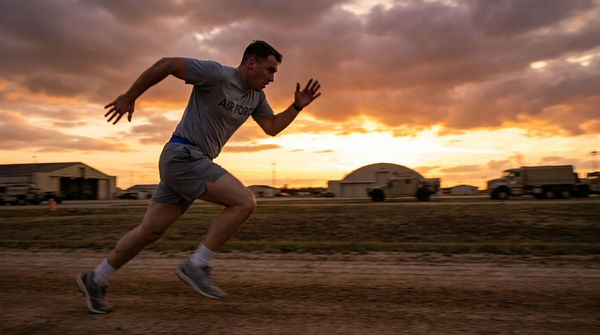
- Sprint intervals: 10 x 100m at full effort with 60-second rest. No equipment, high output.
- Weighted rucking: Add a loaded pack and walk. The Battle Bunker Hybrid Weight Vest works well here for hands-free loading that keeps your arms free to move naturally.
Integrating Bodyweight Training Into a Hybrid Program
Bodyweight training works well as the foundation of a hybrid program that also includes loaded carries, running, and strength work:
- Use bodyweight sessions on days when you're traveling or equipment isn't available.
- Add lifting straps when you do have bar access for pull-up progressions, extending grip endurance so you can train more volume.
- Use resistance bands on pull and press exercises to bridge the gap between bodyweight and loaded training.
- Keep a core focus in every session. A strong midsection carries over to everything else: running, rucking, lifting.
The Habits That Make It Work
Bodyweight training only delivers results when the supporting habits are in place:
- Sleep: 7-9 hours. Recovery is when adaptation happens.
- Nutrition: Enough protein to support muscle retention and repair. Stay hydrated.
- Consistency: Three focused sessions per week beats seven half-hearted ones. Show up, do the work, leave.
- Tracking: Write down your reps and times. Progress is slow enough that it's easy to miss if you're not measuring it.
Final Word
A bodyweight workout no equipment plan is one of the best defaults for staying strong, conditioned, and consistent. Whether it's your primary training method or a reliable backup, the fundamentals are the same: push, pull, squat, hinge, core, and cardio. Master those patterns at bodyweight, and you've built a foundation that carries over to everything else. Battle Bunker's resistance bands and accessories are there when you want to add resistance to the work, but you don't need them to start making progress.