

How to Pass the Military Tape Test in 2026: Eating to Beat the Waist-to-Height Standard

The tape test you grew up hearing about is gone. As of 2026, the Department of Defense measures body composition with a single number: your waist circumference at the navel divided by your height. Under 0.55 meets the DoD standard used by the Army, Navy, Air Force, and Space Force. The Marine Corps holds a stricter line at 0.52. Go over, and what happens next depends on your branch: the Navy runs a body fat calculation, while the Army, since July 2026, treats 0.55 or above as out of standard with no tape test to fall back on.
We covered the policy details in our guide to the new Army height and weight standards. This post is about the part that actually moves the number: how you eat. Waist size responds to sustained nutrition habits far more than to any ab workout, so if your ratio is creeping toward the limit, the kitchen is where you fix it.
Know Your Number First
Measure your waist at the navel, relaxed, after a normal morning. Divide by your height in inches. A 36-inch waist at 70 inches tall is 0.514, comfortably under the DoD line. Run your own numbers in the free waist-to-height ratio calculator, and remember most services now measure twice per year, so the goal is a habit you can hold, not a two-week crash.
The Only Math That Shrinks a Waist
You lose inches from your midsection by losing fat, and you lose fat with a moderate calorie deficit held for weeks. The sports science consensus is boring and reliable: a deficit of roughly 300 to 500 calories per day produces about 0.5 to 1 pound of fat loss per week, which for most people translates to roughly half an inch off the waist every 2 to 4 weeks. Faster than that and you start burning muscle, tanking your run times and strength numbers, which is a bad trade when you still have a PT test to pass. Check where your scores sit with the military PT calculators while you cut.
Five Nutrition Rules That Do the Work
1. Anchor every meal with protein
Aim for roughly 0.7 to 1 gram per pound of body weight per day. Protein preserves muscle in a deficit and it is the most filling macronutrient, which makes the deficit sustainable. Practical version: a palm-to-two-palm portion of meat, fish, eggs, or dairy at every meal.
2. Eat food that fills you up per calorie
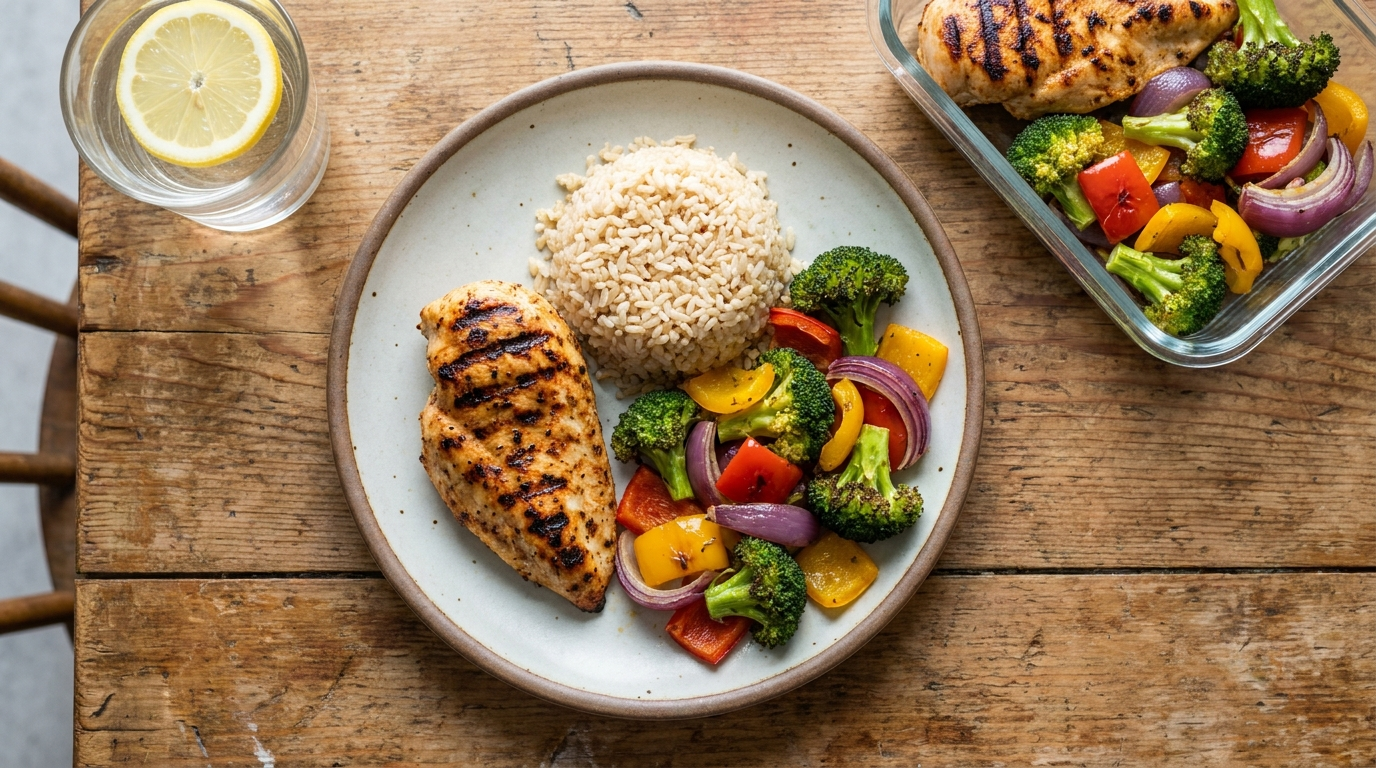
Vegetables, fruit, potatoes, rice, oats, and lean protein crowd out the calorie-dense snacks that quietly erase your deficit. You do not need to cut carbs. You need most of your carbs to come from food that requires a fork.
3. Handle liquid calories and alcohol
Sodas, energy drinks, and beer are the fastest way to out-eat a training program. Swap to zero-calorie versions and keep alcohol to a couple of drinks per week during a cut. This single change is worth the first inch for a lot of service members.
4. Keep meal timing consistent around training
Eat a carb and protein meal 2 to 3 hours before hard sessions and again within a couple hours after. You will train harder, recover better, and be far less likely to raid the vending machine at 2100.
5. Do not crash the week before measurement
Dehydrating, skipping meals, or living in a sauna suit before tape day is risky, miserable, and mostly cosmetic. The new twice-yearly assessment cycle means the only strategy that works is one you can repeat every day.

A plan, not a guess
SHRED 12-Week Fat Loss Program
A structured 12-week training and nutrition program built to strip fat while you keep your strength, $29.
Shop now →Train to Keep Muscle While the Waist Comes Down
Nutrition creates the deficit; training decides whether the weight you lose is fat or muscle. Keep two to three strength sessions per week and add low-impact conditioning volume: brisk weighted walks, rucks, and easy runs burn meaningful calories without beating you up. Loaded walking is especially useful during a cut because it costs little recovery. If you want to make those walks count double, a weighted vest turns a 45-minute walk into serious conditioning work, and it is the same tool you will use for ruck training anyway.

Make every walk count
Hybrid Weight Vest MK2
Adjustable loaded-vest kit for weighted walks, rucks, and calisthenics during your cut, $199.99.
Shop now →FAQ
What waist-to-height ratio do I need to pass in 2026?
Under 0.55 for the Army, Navy, Air Force, and Space Force. The Marine Corps standard is 0.52 or below. In the Navy, exceeding the ratio moves you to a body fat calculation rather than an automatic failure; in the Army, since Army Directive 2026-13 (July 2026), it is out of standard with no secondary tape test. See the 2026 USMC standards guide for Marine-specific details.
How fast can I realistically shrink my waist?
With a moderate deficit and consistent training, about half an inch every 2 to 4 weeks is a sustainable rate for most people. If you are two inches over, start 3 to 4 months before your assessment window.
Do ab exercises reduce waist size?
Not directly. Core training builds strength and helps posture, but it does not spot-reduce fat. The tape responds to overall fat loss, which is driven by your calorie balance.
Should I cut carbs to pass the tape test?
No. Low-carb diets drop water weight quickly but cost you training performance. Keep carbs around your workouts, control total calories, and let the waist come down at a steady rate.