
Dead Hang: Benefits, How Long You Should Hang, and How to Progress

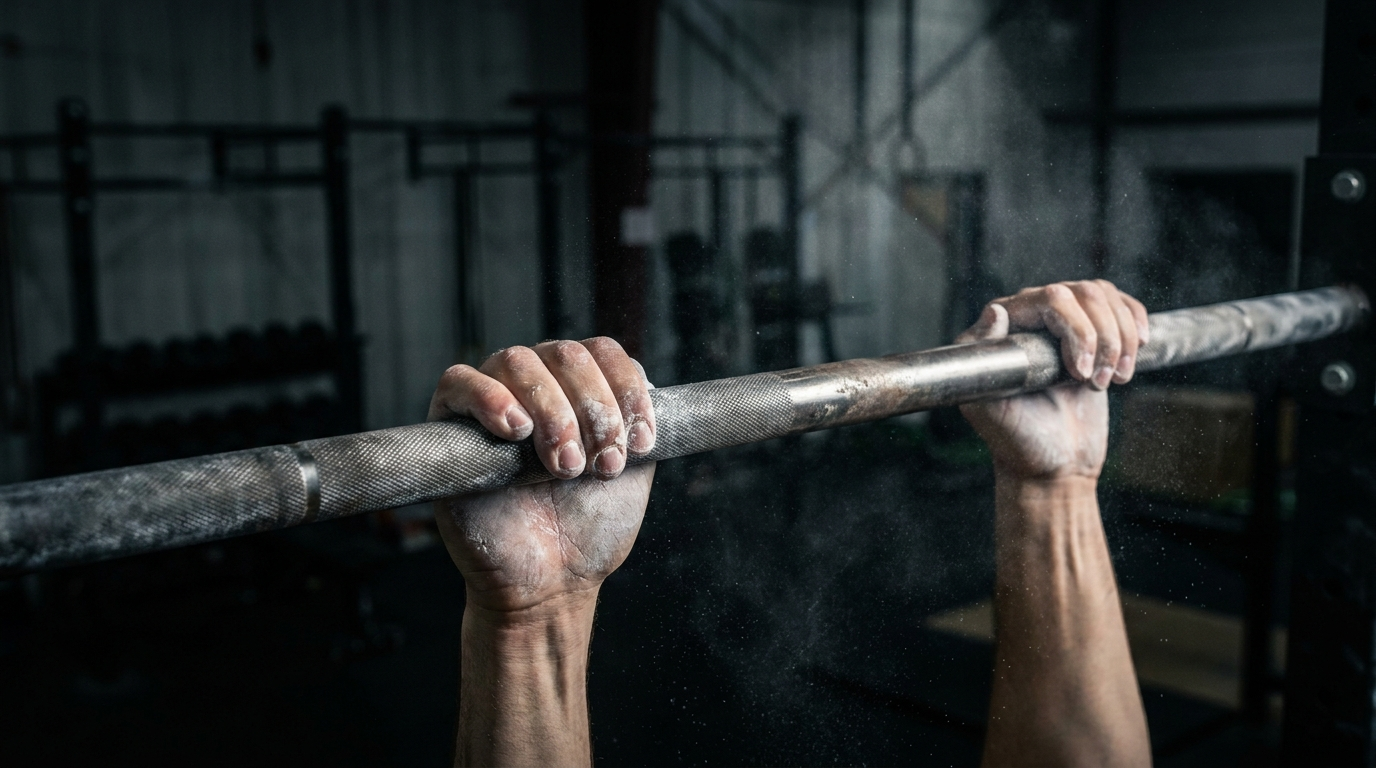
Quick answer: a dead hang is exactly what it sounds like. You grab a pull-up bar with both hands, lift your feet, and hang with straight arms for time. Most beginners can hold 10 to 30 seconds, a solid intermediate goal is 60 seconds, and strong, experienced trainees work toward 90 seconds to 2 minutes. It trains grip endurance, loads the forearms and lats, and gives the shoulders and spine a stretch they rarely get anywhere else.
Dead Hang Benefits: What the Evidence Actually Says
The dead hang has been hyped as everything from a longevity hack to a shoulder cure. Here is the honest version.
Grip and forearm endurance: strong evidence. Hanging is an isometric hold against your full bodyweight, and time under tension is exactly how grip endurance is built. Small studies on climbers have found that structured hang training measurably improves grip endurance over a few weeks, which tracks with what coaches see in practice. Grip strength itself is worth caring about beyond the gym: large population studies have repeatedly linked stronger grip with lower all-cause and cardiovascular mortality. That is an association, not proof that hanging extends your life, but it puts grip work in good company. If you want to build crushing and pinching strength too, that is a different toolbox, and we cover it in our guide to grip strength exercises.
Shoulder health and mobility: promising but limited evidence. A hang pulls the arms into full overhead flexion and stretches the lats, pecs, and the tissues around the shoulder joint. The strongest claim here comes from orthopedic surgeon John Kirsch, who reported that most patients in his roughly 90-person case series improved shoulder pain and avoided surgery with a daily hanging protocol. Worth knowing: that work was never peer reviewed or published, and there was no control group. So treat hanging as a useful overhead mobility drill, not a proven treatment. If your shoulder hurts, see a professional before you hang from anything.
Spinal decompression: real but temporary. Hanging does create gentle traction on the spine, and many lifters find it feels great after heavy squats or a long day sitting. Any increase in space between vertebrae is short-lived, though, and there is no good evidence that hangs fix back pain or posture on their own. Enjoy the stretch. Skip the miracle claims.
Lat and core engagement. A passive hang stretches the lats; an active hang, where you pull the shoulder blades down, trains them isometrically along with the core muscles that keep you from swinging. That scapular control is the foundation of every pull-up you will ever do.
How Long Should You Be Able to Dead Hang?
There is no official standard for hang time, but the benchmarks below reflect the ranges commonly used by coaches and fitness testing sites. Treat them as rough waypoints, not pass-fail lines. Bodyweight matters a lot: hanging at 240 pounds is a very different task than hanging at 150.
| Level | Hang time (two arms) |
|---|---|
| Beginner | 10 to 30 seconds |
| Intermediate | 30 to 60 seconds |
| Advanced | 60 to 120 seconds |
| Elite | 2 minutes or more |
If you cannot hit 10 seconds yet, no problem. Start with the assisted progressions below and you will get there faster than you think.
Proper Dead Hang Form
- Grip: hands about shoulder width, palms facing away, full grip with thumbs wrapped around the bar.
- Arms: fully straight. Elbows locked but not hyperextended.
- Shoulders: for a passive hang, let them shrug up by your ears. For an active hang, pull the shoulder blades down and back without bending the elbows.
- Body: quiet and still. Ribs down, legs together, no swinging.
- Breathing: slow and steady. Holding your breath ends the hang early.
Dead Hang Progressions: Assisted to One Arm
- Foot-assisted hang. Keep your toes on a box or the floor and unload as much bodyweight as you can tolerate. Build to 60 seconds.
- Band-assisted hang. A resistance band under one foot takes off a fixed chunk of weight and forces the full hanging position.
- Full passive hang. The classic dead hang. Build to 60 seconds in one unbroken set.
- Active hang. Same position, shoulder blades pulled down. Harder than it sounds, and the best carryover to pull-ups.
- Weighted hang. Add a dip belt or weighted vest once 90-second bodyweight hangs feel routine.
- Uneven and one-arm work. Shift weight toward one arm, hang from one arm with the other hand assisting on the wrist, then work toward short free one-arm hangs of 5 to 15 seconds.

OWN THE BAR
Hanging Ab Straps V2
Made in the USA straps that turn your dead hang bar into a full core station, so hang time builds abs, not just grip. $59.99.
Shop now →Common Dead Hang Mistakes
- Half gripping the bar. A thumbless or fingertip grip cuts your time and trains less.
- Bending the elbows. That turns a hang into a failed pull-up hold and shifts stress to the biceps.
- Swinging. Momentum hides weakness and makes timing meaningless.
- Ignoring pain. Stretch and effort are fine. Sharp shoulder or elbow pain is a stop sign.
- Only hanging passively. Mix in active hangs once you can, or you will build endurance without control.
How to Program Dead Hangs
Two to four sessions per week is plenty for most people. A simple template: 3 to 5 sets, each at about 50 to 70 percent of your max hang time, resting 1 to 2 minutes between sets. Hang after your main training, not before heavy pulling, so a fried grip does not sabotage your work sets. Test your max hang once every few weeks. If your goal is pull-ups rather than hang time itself, pair your hang work with our pull-up max calculator to set rep targets that match your current strength.
Dead Hang FAQ
How long should I dead hang?
Aim for a total of 2 to 5 minutes of hanging per session, broken into sets. As a single-set benchmark, 30 seconds is respectable, 60 seconds is a solid intermediate target, and 2 minutes puts you well ahead of most gym-goers.
Do dead hangs decompress the spine?
They create real but temporary traction. You may feel taller and looser for a bit, and that stretch can feel great after lifting or sitting. There is no solid evidence of lasting structural change or back pain cure, so treat it as a feel-good stretch, not therapy.
Are dead hangs good for shoulders?
For most healthy shoulders, yes: they stretch the lats and chest and train the joint in a full overhead position. Claims that hanging fixes impingement come mainly from one surgeon's unpublished case series, so keep expectations modest, and get painful shoulders assessed before hanging.
Can I do dead hangs every day?
Short, easy hangs daily are fine for most people and are how many build the habit. Elbows and finger flexor tendons adapt slowly, though, so keep hard, near-maximal or weighted sessions to 2 or 3 per week and back off if anything stays sore.