
Forearm Workout: The Best Forearm Exercises for Size and Grip

Forearms are the most visible muscle group you own. They are out of your sleeves all day, they decide whether your deadlift stays in your hands, and they are usually the first thing to quit in a long set of rows or pull ups. The fix is not complicated. A focused forearm workout takes about 15 minutes, needs almost no equipment, and pays off everywhere from the barbell to the pull up bar.
One note before we start. This guide is about building forearm muscle and endurance. If you want to test and train pure crushing strength, hand grippers, holds, and grip standards, that is its own topic and we covered it in our guide to grip strength exercises. Think of that post as this one's cousin. Here we care about the muscle itself.
The Quick Answer: A 15 Minute Forearm Routine
Run this 2 to 3 times per week, after your main workout or on its own:
- Wrist curls: 3 sets of 15 to 20 reps
- Reverse wrist curls: 3 sets of 15 to 20 reps
- Reverse curls: 3 sets of 10 to 12 reps
- Farmers carry: 3 carries of 30 to 40 meters, heavy
- Dead hang: 2 max holds to finish
That is the whole program. The rest of this article explains why it works and how to do each movement well.
Why Forearms Lag
Forearms get plenty of indirect work from pulling exercises, so most lifters assume they will grow on their own. Two problems with that. First, in rows, deadlifts, and pull ups the forearms only work isometrically. They squeeze the bar but never move through a full range of motion under load, and full range loading is what drives muscle growth best. Second, the muscles on the back of the forearm and the ones that lift the knuckles up get almost zero work from normal training. So the palm side gets some stimulus, the rest gets none, and the whole lower arm stays small. Direct work fixes both problems fast, and forearms recover quickly, so they respond well to frequent training.
Forearm Anatomy in 60 Seconds
You do not need a textbook, just three regions:
- The flexors sit on the palm side of your forearm. They curl your wrist toward you and close your fingers. Wrist curls, carries, and hangs train them.
- The extensors sit on the back of your forearm. They bend the wrist backward and open the fingers. Reverse wrist curls train them, and they are the most neglected region of all.
- The brachioradialis is the thick muscle near your elbow, on the thumb side. Here is the key detail: it crosses the elbow, not the wrist, so no amount of wrist curling touches it. It bends the elbow, which means reverse curls and hammer curls are how you grow it.
Train all three and the forearm thickens from elbow to wrist instead of just near the hand.
The Best Forearm Exercises
Wrist Curls
The classic flexor builder. Sit on a bench, rest your forearms on your thighs or the bench pad with palms up and hands hanging off the edge. Lower the dumbbell by opening the wrist, let it roll toward your fingertips, then curl it back up. Use a full range, light weight, and high reps. Do not bounce, and do not let your elbows lift to cheat the weight up.
Reverse Wrist Curls
Same setup, palms down. Lift the back of your hands toward the ceiling, pause, and lower slowly. You will need roughly half the weight of your normal wrist curls. These train the extensors, balance out all the gripping you already do, and are one of the best things you can do for cranky elbows.
Reverse Curls
A barbell or dumbbell curl with palms facing down. The pronated grip shifts work from the biceps onto the brachioradialis, the muscle that gives the upper forearm its size. Keep your wrists straight and locked, curl to shoulder height, and lower under control. Go lighter than a normal curl and do not swing.
Farmers Carry
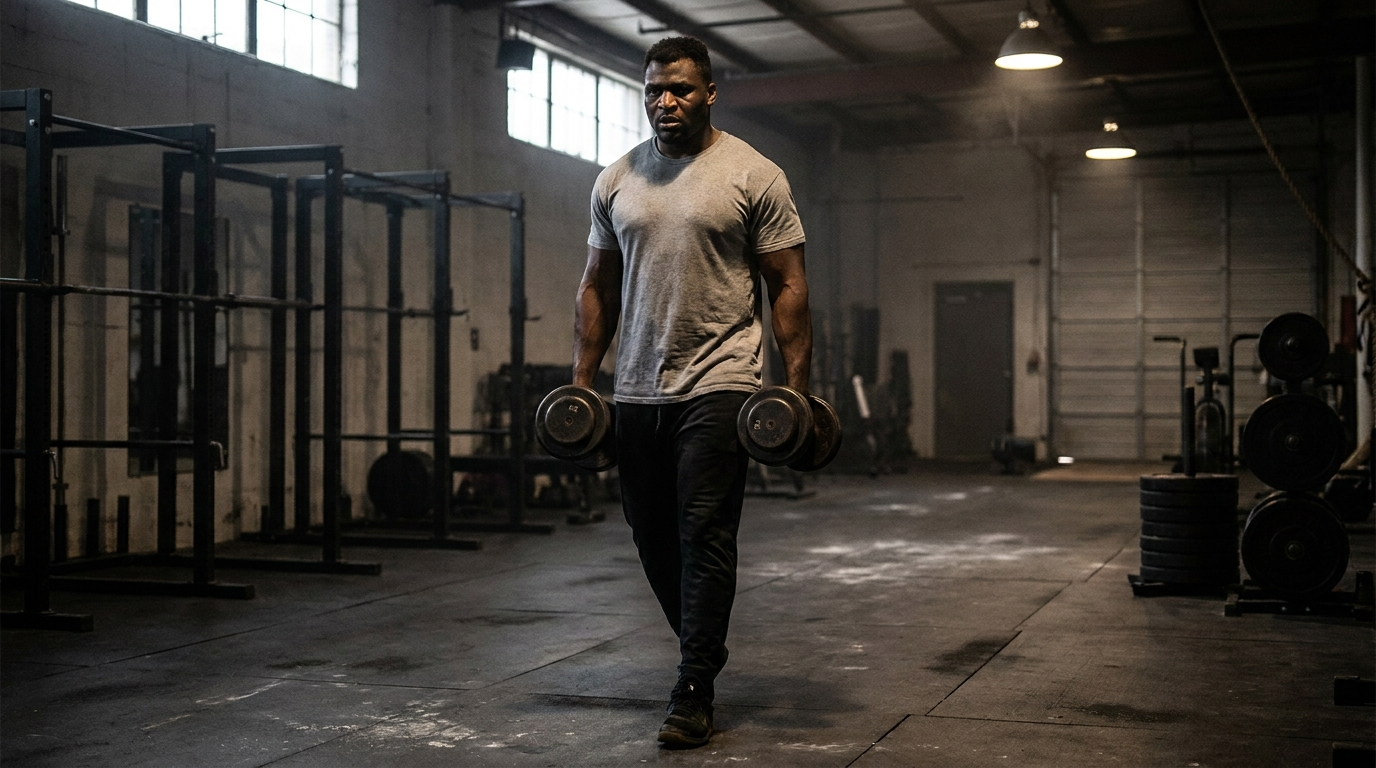
Pick up the heaviest dumbbells you can hold, stand tall, and walk. Carries hammer the flexors isometrically, build real world endurance, and train your traps and core at the same time. Walk fast but controlled, and put the weights down before your posture breaks. We break down loading and distances in our full farmers carry guide.
Dead Hang
Grab a pull up bar with a shoulder width overhand grip and hang with straight arms until your grip gives out. It is brutally simple and it builds forearm endurance, decompresses the shoulders and spine, and directly carries over to pull ups. Beginners should aim for 30 seconds, strong lifters for 60 to 90.
Plate Pinch
Hold a bumper plate or two smooth metal plates by the rim with straight fingers and thumb, arms at your sides, for 20 to 30 seconds. Pinching trains the thumb and finger muscles that bars never touch, which matters for anything you carry in real life.
Towel and Band Work
Drape a towel over a bar and row or hang from the towel ends to make any pull a forearm exercise. For the extensors, wrap a light band around your fingers and open your hand against it for high rep sets. Band work is cheap, joint friendly, and travels anywhere, and we cover more options in our guide to resistance band arm exercises.
A Sample Weekly Routine
- Day 1 (after upper body): wrist curls 3x15, reverse wrist curls 3x15, plate pinch 3 holds
- Day 2 (after lower body): farmers carry 3x40 meters, dead hang 2 max holds
- Day 3 (arm day or home): reverse curls 3x10, towel hangs or band extensions 3 sets
That is roughly 15 minutes per session. Add weight or reps each week like any other muscle, and expect visible change in 6 to 8 weeks.
Heavy Lifters: Manage Forearm Fatigue vs Grip Work
Here is the trap. If you train forearms hard, your grip will be tired, and tired grip caps your heavy deadlifts, rows, and shrugs at whatever your hands can hold that day. The solution is simple scheduling. Do direct forearm work after your heavy pulls or on separate days, never before. And on your heaviest pulling sets, use lifting straps so your back gets full loading regardless of how fried your forearms are. Straps do not make your grip weak if you are training forearms directly. They just stop your weakest link from deciding your strongest lift.

SAVE YOUR PULLS
Battle Straps
Padded lifting straps so forearm fatigue never steals a deadlift or row again. $15.49.
Shop now →FAQ
Do wrist curls work?
Yes, when you do them right. Wrist curls load the forearm flexors through a full range of motion, which indirect gripping never does. The mistakes that give them a bad name are going too heavy, using a two inch range, and quitting after two weeks. Light weight, full range, high reps, and consistency work.
How often can you train forearms?
2 to 4 times per week works for most lifters. Forearms are small, endurance oriented muscles that recover fast, so they handle frequency well. Keep heavy sessions 48 hours apart and vary the exercises between days. Soreness that lingers into your pulling workouts means you should pull the volume back.
How long until forearms grow?
With 2 to 3 direct sessions per week, most people see a noticeable difference in 6 to 8 weeks and measurable size in 3 to 4 months. Forearms respond slower than biceps because you already use them all day, so the bar for a new stimulus is higher. Consistency beats intensity here.
Are forearm workouts the same as grip training?
They overlap but they are not the same. Forearm training builds the size and endurance of the muscles. Grip training targets maximum squeezing, pinching, and holding strength as a skill of its own, with tools like grippers and timed holds. Build the muscle here first, then test it with dedicated grip work.
Related Reading
- Grip strength exercises and how to build a crushing grip (linked above)
- Farmers carry benefits, form, and workouts (linked above)
- Lifting straps: how to choose and use them (linked above)
- Resistance band arm exercises for biceps and triceps (linked above)