
How to Max Your Coast Guard Fitness Test: A Complete Training Guide

The Coast Guard fitness test changed. Since July 1, 2026, every Coast Guard military member takes the Physical Fitness Test (PFT) under COMDTINST 6100.1: one minute of push-ups, a forearm plank, and a cardio event of your choice: a 1.5-mile run, a 2,000-meter row, or a 500-yard or 450-meter swim. Sit-ups are gone. Each event is scored on age and sex tables, you need at least 45 points in every event, and active duty members test twice a year.
This guide gives you the official minimum and maximum for every age group, how scoring and retests work, the body composition rules, and how to train for a top score.
Already know your numbers? Use the Battle Bunker military PT calculators, or see how the branches compare in our military fitness test comparison.
How the Coast Guard PFT works
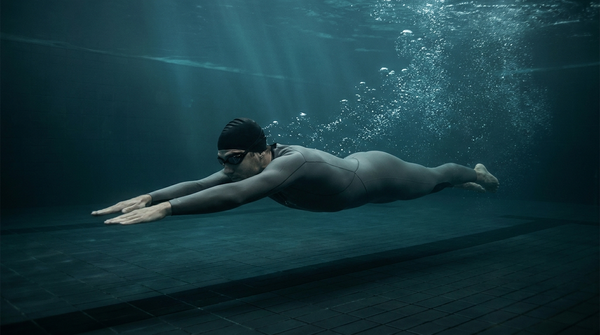
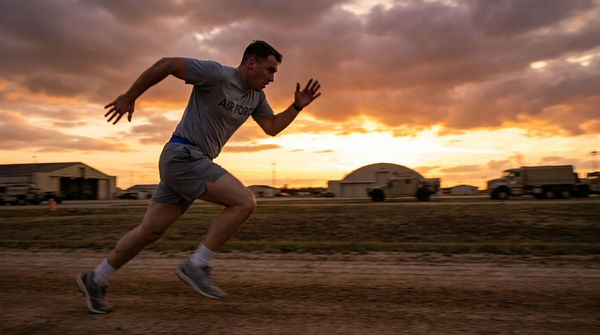
- Events, in order: push-ups (1 minute), forearm plank (max hold), then cardio: a 1.5-mile run or walk on a course or treadmill, a 2,000-meter row, or a 500-yard or 450-meter swim.
- Same day, short rest: all three events on the same day, with no more than 15 minutes of rest between them.
- Passing: at least 45 points in every event. Fail one event and you fail the test.
- Scoring: each event earns 45 to 100 points from the official tables, which convert to a category from Average (4) up to Superior (7). For example, at ages 17 to 19, 45 to 55 points is Average, 60 to 70 Above Average, 75 to 85 Excellent and 90 to 100 Superior. Failing one event is scored a 3, two events a 2, and all three a 1.
- How often: twice a year for active duty members; once a year for Selected Reserve members not on long-term orders.
- Before every official test: a pre-screening form, and a certified lifeguard on deck for the swim.
The forearm plank first replaced sit-ups in the Coast Guard's boat crew fitness test in July 2025. Members then took a consequence-free fitness assessment from September 2025 through June 2026, and the PFT for an accountable score began July 1, 2026.
Coast Guard PFT minimum scores (45 points)
These are the passing minimums from Appendices A and B of COMDTINST 6100.1. Push-ups and the plank are minimums; run, row and swim are maximum times.
Men
| Age | Push-ups (1 min) | Plank | 1.5-mile run | 2,000 m row | 500 yd swim | 450 m swim |
|---|---|---|---|---|---|---|
| 17 to 19 | 30 | 1:11 | 12:45 | 9:20 | 12:45 | 12:35 |
| 20 to 24 | 30 | 1:10 | 13:30 | 9:25 | 13:00 | 12:50 |
| 25 to 29 | 27 | 1:09 | 14:00 | 9:30 | 13:08 | 12:58 |
| 30 to 34 | 24 | 1:07 | 14:30 | 9:35 | 13:15 | 13:05 |
| 35 to 39 | 21 | 1:06 | 15:00 | 9:40 | 13:23 | 13:13 |
| 40 to 44 | 18 | 1:05 | 15:30 | 9:45 | 13:30 | 13:20 |
| 45 to 49 | 15 | 1:03 | 16:08 | 9:50 | 13:38 | 13:28 |
| 50 to 54 | 12 | 1:02 | 16:45 | 9:55 | 13:45 | 13:35 |
| 55 to 59 | 12 | 1:01 | 17:09 | 10:00 | 13:55 | 13:45 |
| 60 to 64 | 11 | 1:00 | 18:52 | 10:05 | 14:05 | 13:55 |
| 65+ | 11 | 0:58 | 20:35 | 10:10 | 14:15 | 14:05 |
Women
| Age | Push-ups (1 min) | Plank | 1.5-mile run | 2,000 m row | 500 yd swim | 450 m swim |
|---|---|---|---|---|---|---|
| 17 to 19 | 15 | 1:01 | 15:00 | 10:40 | 14:15 | 14:05 |
| 20 to 24 | 15 | 1:00 | 15:30 | 10:45 | 14:30 | 14:20 |
| 25 to 29 | 14 | 0:59 | 16:08 | 10:50 | 14:45 | 14:35 |
| 30 to 34 | 11 | 0:58 | 16:45 | 10:55 | 15:00 | 14:50 |
| 35 to 39 | 10 | 0:56 | 17:00 | 11:00 | 15:15 | 15:05 |
| 40 to 44 | 8 | 0:55 | 17:15 | 11:05 | 15:30 | 15:20 |
| 45 to 49 | 7 | 0:54 | 17:23 | 11:10 | 15:38 | 15:28 |
| 50 to 54 | 6 | 0:53 | 17:30 | 11:15 | 15:45 | 15:35 |
| 55 to 59 | 5 | 0:52 | 18:34 | 11:20 | 16:00 | 15:50 |
| 60 to 64 | 4 | 0:51 | 19:43 | 11:25 | 16:15 | 16:05 |
| 65+ | 4 | 0:50 | 20:52 | 11:30 | 16:30 | 16:20 |
Coast Guard PFT maximum scores (100 points)
Men
| Age | Push-ups (1 min) | Plank | 1.5-mile run | 2,000 m row | 500 yd swim | 450 m swim |
|---|---|---|---|---|---|---|
| 17 to 19 | 67 | 3:24 | 8:15 | 7:00 | 6:30 | 6:20 |
| 20 to 24 | 67 | 3:20 | 8:30 | 7:05 | 6:30 | 6:20 |
| 25 to 29 | 62 | 3:16 | 8:55 | 7:10 | 6:38 | 6:28 |
| 30 to 34 | 57 | 3:12 | 9:20 | 7:15 | 6:45 | 6:35 |
| 35 to 39 | 51 | 3:08 | 9:25 | 7:20 | 6:53 | 6:43 |
| 40 to 44 | 44 | 3:04 | 9:30 | 7:25 | 7:00 | 6:50 |
| 45 to 49 | 44 | 3:01 | 9:33 | 7:30 | 7:08 | 6:58 |
| 50 to 54 | 36 | 2:57 | 9:35 | 7:35 | 7:15 | 7:05 |
| 55 to 59 | 33 | 2:54 | 10:42 | 7:40 | 7:17 | 7:07 |
| 60 to 64 | 30 | 2:50 | 11:21 | 7:45 | 7:20 | 7:10 |
| 65+ | 30 | 2:47 | 11:41 | 7:50 | 7:25 | 7:15 |
Women
| Age | Push-ups (1 min) | Plank | 1.5-mile run | 2,000 m row | 500 yd swim | 450 m swim |
|---|---|---|---|---|---|---|
| 17 to 19 | 47 | 3:14 | 9:29 | 8:00 | 6:45 | 6:35 |
| 20 to 24 | 47 | 3:10 | 9:47 | 8:05 | 7:15 | 7:05 |
| 25 to 29 | 47 | 3:06 | 10:17 | 8:10 | 7:23 | 7:13 |
| 30 to 34 | 46 | 3:02 | 10:46 | 8:15 | 7:30 | 7:20 |
| 35 to 39 | 42 | 2:59 | 10:51 | 8:20 | 7:45 | 7:35 |
| 40 to 44 | 38 | 2:55 | 10:56 | 8:25 | 8:00 | 7:50 |
| 45 to 49 | 37 | 2:52 | 10:58 | 8:30 | 8:15 | 8:05 |
| 50 to 54 | 35 | 2:48 | 11:00 | 8:35 | 8:30 | 8:20 |
| 55 to 59 | 28 | 2:45 | 12:23 | 8:40 | 8:45 | 8:35 |
| 60 to 64 | 21 | 2:42 | 13:34 | 8:45 | 9:00 | 8:50 |
| 65+ | 21 | 2:38 | 14:45 | 8:50 | 9:15 | 9:05 |
Retests, evaluations and what happens if you fail
- One retake: 30 to 60 days after a failed official test, requested in writing within 24 hours. Your command can waive the 30-day wait. If you fail the retake too, the higher overall score is recorded.
- While noncompliant: you are barred from resident training such as A Schools, from high-visibility assignments like recruiting and command cadre, and from Coast Guard funded graduate programs, and you cannot be frocked.
- Separation: members who are noncompliant for three consecutive official test cycles are processed for separation.
- Evaluations: PFT results start appearing on officer evaluations in January 2027 and enlisted evaluations in January 2028.
Body composition standards
Body composition is a separate program from the PFT, screened twice a year in this order: maximum allowable weight, then maximum body fat, then abdominal circumference, then the PFT. The weight screen uses a BMI range of 19.0 to 27.5 regardless of age or sex, for example 132 to 191 pounds at 70 inches. If you are over, body fat limits apply:
| Age | Men | Women |
|---|---|---|
| Under 30 | 22% | 32% |
| 30 to 39 | 24% | 34% |
| 40 and over | 26% | 36% |
The maximum abdominal circumference is 39.0 inches for men and 35.5 inches for women. As a last step, an overall PFT average of 5 also achieves body composition compliance. The Coast Guard says waist-to-height ratio will not be used for the October 2026 screening, and more updates to these rules are expected.
Joining the Coast Guard: entry standards
The Coast Guard expects all new members, enlisted and officer, to be able to do push-ups in one minute (29 for men, 15 for women), hold a forearm plank (1:18 and 1:09) and run 1.5 miles (12:29 and 15:05). You take an entrance fitness test in your first week of the 8-week boot camp at Cape May. Boot camp and Officer Candidate School both include swim training; Cape May's swim test has you jump from a 1.5-meter platform, swim 100 meters in 5 minutes and tread water for 5 minutes. Coast Guard Academy cadets take a different test every semester, the Physical Fitness Examination: cadence push-ups, a forearm plank and a 1.5-mile run, scored out of 300 points with 200 needed to graduate. It is covered in our service academy fitness test guide.
How each event is judged
The PFT's own guide is internal, but the Coast Guard's published boat crew procedures describe the same events:
- Push-ups: hands under your shoulders, body in a straight line, lower until your chest is within a fist's width (or a 3-inch sponge) of the deck, then press back to straight arms. Your back must stay straight the whole time.
- Forearm plank: elbows under your shoulders at 90 degrees, feet hip-width apart, and a straight line from head to heels with only forearms, hands and toes on the deck. Shaking is allowed as long as your position holds; clasping your hands is not.
- Row: keep moving continuously so the monitor does not cut off, on a rower that records time and distance.
- Run: a measured course or a treadmill.
How to max each event
Push-ups. One minute rewards rep speed and endurance. Do three to five sub-failure sets through the day at 50 to 60 percent of your max; if your max is 40, sets of 20 to 24. Practice timed one-minute sets at the pace you can hold, because going out too fast and stalling is the most common way to lose reps. Hit full depth every rep: shallow reps do not count.
Forearm plank. The plank is very trainable. Three or four times a week, accumulate 3 to 4 minutes of total plank time in holds of 40 to 60 seconds, and once a week do a max hold in strict test position. Brace hard and breathe; most people fail when their hips drift, not when their abs give out.
Cardio. Pick the event that suits you. Runners should run; strong swimmers can earn more points in the water; the row suits athletes with a rowing or strength background. For the 1.5-mile run, build an easy base of two or three runs a week, then add one interval session (6 x 400 meters at goal pace with 60 to 90 seconds of rest) and one tempo run (12 to 15 minutes at goal pace). Whatever you pick, practice it at test distance at least twice before test day.
8-week Coast Guard PFT training plan
| Day | Session |
|---|---|
| Monday | Push-up volume (3 sets at 55 percent of max), easy 25-minute run or row |
| Tuesday | Plank accumulation (4 rounds), core circuit |
| Wednesday | Intervals in your cardio event at goal pace |
| Thursday | Push-up volume and timed one-minute practice set, light core |
| Friday | Tempo session: 12 to 15 minutes at goal pace |
| Saturday | Long easy cardio (30 to 40 minutes), max plank hold |
| Sunday | Rest, or easy swim if you test in the water |
Week 4: run a full mock PFT in order, with no more than 15 minutes between events, and score it against your age group. Week 6: repeat it. Week 8: cut volume by about 40 percent, keep intensity, and rest two days before the official test.

Battle Bunker Battle Bands
Add resistance to push-ups, assist pull-up and dip training, and use for mobility work between runs. Three resistance levels. Built for the functional fitness demands of military PT prep, wherever you train.
Shop Battle BandsAiming for rescue swimmer? Aviation Survival Technicians have their own community fitness test; see our Coast Guard and Navy rescue swimmer guide.
Sources: COMDTINST 6100.1, Physical Readiness Program (June 16, 2026); Coast Guard Academy, Physical Fitness Exam; MyCG, June 10, 2026; ALCOAST 082/26; ALCOAST 272/26 (body composition); COMDTINST 1020.8I, Weight and Body Composition; BOAT Manual Vol II, COMDTINST 16114.33F (event procedures); GoCoastGuard, Eligibility Requirements. Rules change; confirm with your command or recruiter.
Frequently Asked Questions
What is the Coast Guard PFT?
The Physical Fitness Test every Coast Guard military member takes since July 1, 2026: one minute of push-ups, a forearm plank, and a cardio event of your choice (a 1.5-mile run or walk, a 2,000-meter row, or a 500-yard or 450-meter swim), done in that order on the same day.
What are the Coast Guard PFT minimums?
They depend on age and sex. For ages 17 to 19, men need 30 push-ups, a 1:11 plank and a 12:45 1.5-mile run; women need 15 push-ups, a 1:01 plank and a 15:00 run. Each minimum is worth 45 points, and missing any one event fails the test.
Did the Coast Guard get rid of sit-ups?
Yes. The forearm plank replaced sit-ups in the Coast Guard's boat crew fitness test in July 2025, and the PFT that all members take since July 2026 uses push-ups, the plank and a cardio event. Sources that still list sit-ups are out of date.
How often do you take the Coast Guard PFT?
Twice a year for active duty members, and once a year for Selected Reserve members who are not on long-term orders.
What happens if you fail the Coast Guard PFT?
You get one official retake 30 to 60 days later, requested in writing within 24 hours; if you fail the retake too, the higher of the two scores is recorded. Until you pass you are barred from things like A School and other resident training, and members who are noncompliant for three consecutive test cycles are processed for separation.
What fitness standards do you need to join the Coast Guard?
The Coast Guard expects new members to perform push-ups in one minute (29 for men, 15 for women), a timed forearm plank (1:18 and 1:09) and a 1.5-mile run (12:29 and 15:05). Boot camp and Officer Candidate School both include swim training.