
Hybrid Training After 40: How to Build Strength and Endurance That Lasts

Photo: Dan Fahey, Gritty Soldier
Turning 40 does not end your athletic life. Plenty of people set personal records in their forties and fifties, and fitness races now have age groups running into the 80s. HYROX's current rulebook, for example, lists age groups all the way up to 85 to 89. What changes after 40 is not whether you can train hard. It is how much you can get away with when you train badly.
Hybrid training, meaning strength and endurance trained together, may be the best fit there is for athletes over 40. It builds the two qualities that matter most for staying capable as you age, and it keeps training interesting enough that you stick with it.
Why Hybrid Training Works After 40
Strength and muscle are use-it-or-lose-it qualities, and the losing gets faster as you age if you do not train them. Aerobic fitness follows the same rule. Most people over 40 drift toward one or the other: the runner who stopped lifting, or the lifter whose cardio is walking to the car. Hybrid training covers both on purpose.
The CDC's physical activity guidelines put a baseline on it. Adults should get at least 150 minutes of moderate aerobic activity (or 75 minutes of vigorous activity) each week, plus muscle-strengthening work on at least 2 days. For adults 65 and older, the guidelines add balance training. A well-built hybrid week clears all of that without trying.
One more thing before you start. If you have been inactive, are new to hard training, or have any history of heart, balance, or joint problems, check with your doctor first.
The 5 Rules of Hybrid Training After 40
1. Lift Heavy Enough to Matter
Light weights for high reps are not enough on their own. Two or three full-body strength sessions per week built around squats or lunges, a hinge like the trap bar deadlift, a press, a row or pull-up, and loaded carries will do more for you than any amount of machine circuits. Leave one or two reps in the tank on most sets. You are training for decades, not for one workout.
2. Make Most of Your Cardio Easy
The biggest mistake older hybrid athletes make is running every session hard. Keep most of your aerobic work at a pace where you could hold a conversation, and save one session a week for intervals or hills. Easy work builds the engine. Hard work every day just builds fatigue.
3. Manage Impact, Not Just Mileage
Joints and tendons adapt slower than muscle and lungs. You do not have to stop running, but you can get a lot of aerobic training from lower-impact options: rowing, cycling, incline walking, and loaded walking with a weighted vest or ruck. A vest walk turns a simple walk into real training with very little pounding. Our guide to weighted vest walking covers how much weight to start with.
4. Plan Your Recovery Like a Workout
Sleep, food, and easy days are where you actually get fitter. Put your two hardest sessions at least 48 hours apart, take a full rest day each week, and every fourth or fifth week, cut your volume by about a third. If your sleep, mood, or joints start heading the wrong direction, that is your cue to back off before something breaks.
5. Train Grip, Balance, and Power
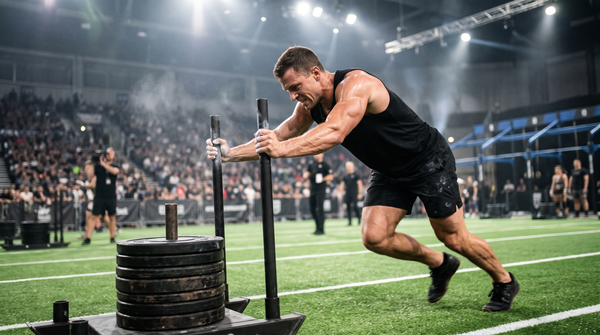
These are the qualities that fade first and quietly. Carries and dead hangs build grip. Single-leg work like step-ups, split squats, and lunges builds balance. A few sets of jumps, medicine ball throws, or fast sled pushes keep you powerful. Curious where your grip stands? Compare it with the average grip strength by age.

Hybrid Weight Vest MK2
Turn walks, step-ups, and push-ups into real training without adding miles. 20 lb of steel shot, adjustable fit from 5'0" to 6'5", from $199.99.
Shop the Hybrid Vest MK2A Sample Hybrid Week After 40
- Monday, Strength A: Goblet or front squat 3 x 6 to 8, push-ups or bench press 3 x 8, bent-over row 3 x 10, farmers carry 4 x 40 meters.
- Tuesday, Easy Aerobic: 30 to 45 minutes of conversational running, rowing, or cycling.
- Wednesday, Loaded Walk: 30 to 45 minutes with a weighted vest, including some hills.
- Thursday, Strength B: Trap bar deadlift 3 x 5, split squats 3 x 8 per leg, pull-ups or band-assisted pull-ups 3 sets, overhead press 3 x 8, dead hangs 3 x max.
- Friday: Rest or mobility.
- Saturday, Hybrid Conditioning: 4 to 6 rounds of a 400 meter run or 500 meter row, 10 sandbag cleans or ground-to-shoulders, 10 walking lunges per leg. Steady and controlled.
- Sunday: Long easy walk, hike, or bike ride.
That is about 2.5 to 3.5 hours of training in a week, with two strength days, three or more aerobic sessions, and balance and grip work built in. If you want a structured starting point, the 12-3-30 workout with a weighted vest is a simple low-impact session you can drop into Wednesday.

The Skirmish Training Sandbag
Adjustable from 20 to 40 lb for squats, cleans, carries, and lunges. Joint-friendly, hard to outgrow, made in the USA, $89.
Shop the SkirmishWant a Goal? Race in Your Age Group
A race on the calendar is the best motivation there is. Fitness races like HYROX score you against your own age group, so a 52-year-old is racing other 50 to 54 year olds, not 25-year-old pros. If that sounds good, start with our explainer on what HYROX is and the 8-week beginner plan.
Hybrid Training After 40 FAQ
Is it too late to start hybrid training at 40?
No. People start strength and endurance training in their 40s, 50s, and later and make real progress. Start conservatively, build gradually, and check with your doctor if you have been inactive.
How many days a week should I train after 40?
Four to six days works for most people: two or three strength sessions and two or three aerobic sessions, with at least one full rest day.
Should I stop running after 40?
Not if you enjoy it and your joints handle it. Keep most runs easy, build mileage slowly, and mix in lower-impact options like rowing, cycling, and weighted vest walks.
How much strength training do adults need?
The CDC recommends muscle-strengthening activities on at least 2 days per week, alongside at least 150 minutes of moderate aerobic activity.
Is a weighted vest good for people over 40?
For many people, yes. It adds load to walking and bodyweight exercises without adding impact. Start light, around 5 to 10 percent of your bodyweight, and build up.
Sources: CDC, Physical Activity Guidelines for Older Adults; HYROX 26/27 Singles Rulebook. This article is general fitness information, not medical advice.