

What Is OCS? Officer Candidate School Explained (Requirements, Length, and How to Prepare)

OCS stands for Officer Candidate School. It is the military's accelerated leadership course that turns college graduates, enlisted soldiers, and warrant officers into commissioned officers. If you keep seeing "OCS" in recruiting conversations and want a straight answer on what it means, how long it takes, and whether you can qualify, this guide covers all of it, branch by branch.
What Does OCS Mean?
Officer Candidate School is a short, intense course that teaches leadership, tactics, and military standards to candidates who already hold (or are close to holding) a college degree. Graduates commission as second lieutenants in the Army, Marine Corps, and Air Force, or as ensigns in the Navy. Unlike a four-year service academy or ROTC, OCS compresses officer training into roughly 9 to 13 weeks, which is why it attracts career changers, prior-enlisted soldiers, and recent graduates who want the fastest route to a commission.
OCS by Branch
Every branch runs its own version, and the names and lengths differ.
Army OCS, Fort Moore, Georgia
The Army's course runs 12 weeks at Fort Moore (formerly Fort Benning). The first six weeks are immersive: training seven days a week with candidates restricted to the battalion area, focused on leadership fundamentals, physical training, and military instruction. Weeks 7 through 12 shift to field exercises and graded leadership positions. Civilians attend the 10-week Basic Combat Training first, then move to OCS.
Navy OCS, Newport, Rhode Island
Navy OCS runs about 13 weeks at Naval Station Newport. It layers seamanship, navigation, damage control, and firefighting on top of the standard leadership and physical training, since new ensigns head to the fleet.
Marine Corps OCS, Quantico, Virginia
The Marine Officer Candidates Course runs 10 weeks at Quantico. It is famously evaluation-heavy: candidates are screened more than they are taught, and graduates still owe six months at The Basic School before hitting the fleet.
Air Force OTS, Maxwell AFB, Alabama
The Air Force and Space Force call their version Officer Training School (OTS). It runs about 9.5 weeks at Maxwell Air Force Base in Alabama, with a heavier academic and leadership-lab emphasis.
Army OCS Requirements
Requirements vary slightly by branch and by year, but the Army standard looks like this:
- Education: Civilian applicants need a bachelor's degree. Enlisted soldiers and warrant officers can apply with 90 semester hours of college credit and must finish the degree requirements before commissioning under most pathways.
- Age: Federal OCS applicants must generally be able to commission before their 34th birthday. National Guard state OCS programs allow commissioning up to the 42nd birthday, and waivers exist for both.
- Aptitude: A General Technical (GT) score of 110 or higher on the ASVAB.
- Citizenship and clearance: U.S. citizenship, plus the ability to pass a background check and qualify for a security clearance.
- Fitness and medical: You must meet Army medical accession standards and pass the Army Combat Fitness Test. Run your projected score through our Army ACFT calculator before you apply, because showing up barely passing is a bad plan.
What the Course Is Actually Like
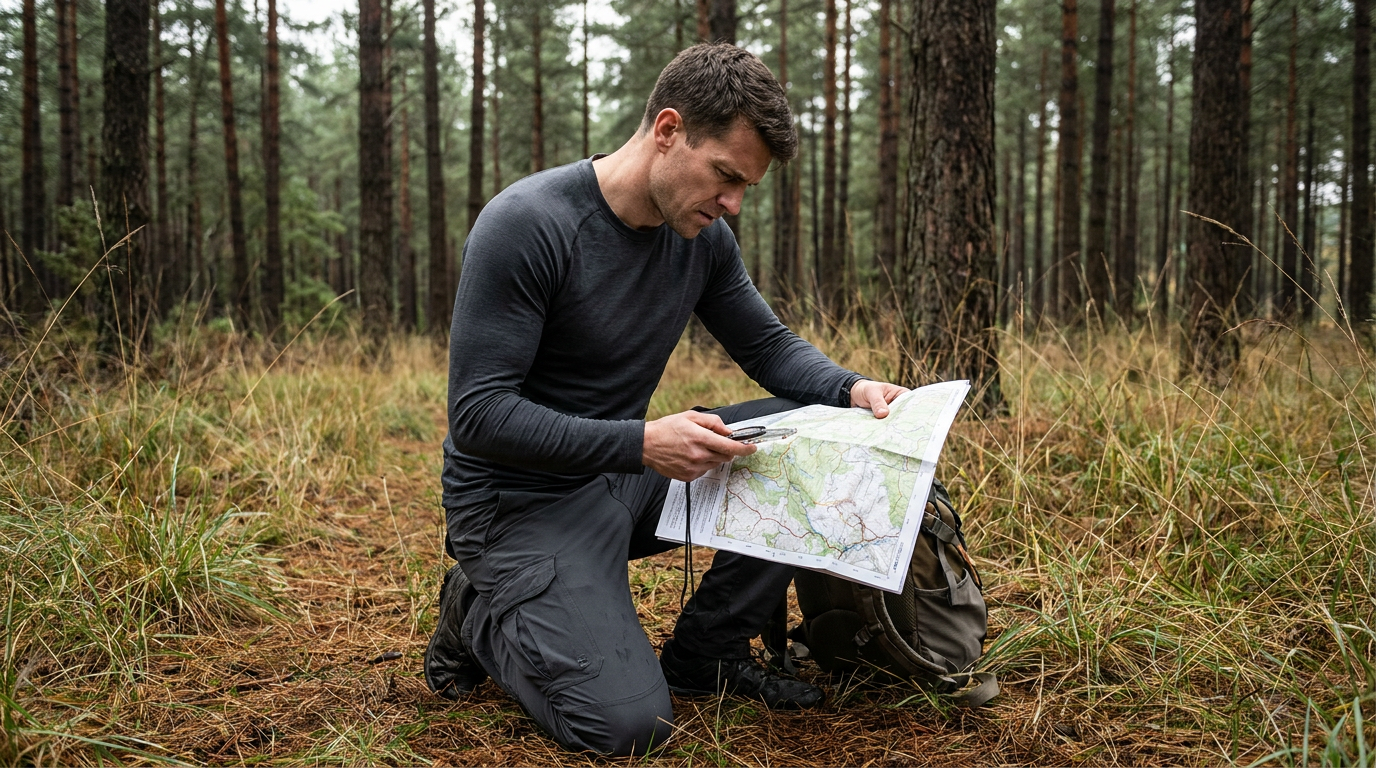
Expect three overlapping demands: physical volume, sleep-restricted academics, and constant evaluation. Daily PT includes runs, ruck marches, and calisthenics, and the field phases add loaded movement over rough terrain, land navigation, and squad tactics. Academically you will absorb Army doctrine, operations orders, and military history, then get tested on it. The part that actually washes people out is leadership evaluation: cadre rotate candidates through leadership positions and grade how you plan, communicate, and hold a team together while tired. Many OCS graduates head straight to follow-on schools such as Airborne School, so the fitness bar does not drop after graduation day.
How to Train for OCS
Candidates who struggle at OCS almost always struggle with the same two things: running volume and moving under load. Build your prep around both.
- Run 3 to 4 days per week. Mix easy aerobic runs with intervals. A 5-mile run at a conversational pace should feel routine before you ship.
- Ruck or train under load 1 to 2 days per week. Start light, around 20 to 25 pounds, and progress distance before weight. Weighted vest work is an efficient way to build load tolerance on days you cannot get outside.
- Strength train 2 to 3 days per week. Deadlifts, squats, carries, pull-ups, and push-ups map directly to ACFT events and field tasks.
- Test yourself. Use the free tools on our military PT calculators page to benchmark where you stand and retest monthly.

Train Under Load
Hybrid Weight Vest MK2
Adjustable weighted vest built for ruck conditioning, loaded calisthenics, and hybrid training blocks. $199.99.
Shop now →Frequently Asked Questions
How long is Army OCS?
Army OCS is 12 weeks at Fort Moore, Georgia. Civilians add 10 weeks of Basic Combat Training in front of it, so the civilian-to-lieutenant timeline is roughly 22 weeks of training plus in-processing.
Is OCS harder than basic training?
Physically they are comparable, but OCS adds academic testing and continuous leadership evaluation on limited sleep. Most graduates say the mental load, not the PT, is what makes OCS harder.
Can you go to OCS without a degree?
Civilians need a completed bachelor's degree. Enlisted soldiers can apply with 90 semester hours of credit under Army programs, though a degree is required before or shortly after commissioning depending on the pathway.
What GPA or test scores do you need for OCS?
The Army requires a GT score of 110 or higher on the ASVAB. There is no fixed GPA cutoff, but selection boards are competitive, so strong academics, fitness scores, and letters of recommendation all matter.
Applying to a service academy instead? Compare your fitness test results with our Candidate Fitness Assessment calculator.