
Air Assault School: What to Expect, Requirements, and How to Train

Air Assault School is often called the "10 toughest days in the Army." The course teaches soldiers helicopter-borne operations, and it runs a Day Zero of entry tests followed by 10 days of instruction in three phases: Combat Assault, Sling Load and Rappel. It ends with a 12-mile ruck march in under three hours. Here is what each day involves, what changed recently, and how to train so you are not one of the many who wash out.
What is Air Assault School?
The main course is run by The Sabalauski Air Assault School at Fort Campbell, Kentucky. Its published schedules run from Day Zero through Day 10, and graduates earn their air assault wings, the Air Assault Badge. The school also teaches the course at other locations and through mobile classes.
| Air Assault School | |
|---|---|
| Length | Day Zero plus 10 days of instruction |
| Phases | Combat Assault, Sling Load, Rappel |
| Timed events | 2-mile run, 4-mile run, obstacle course, 6-mile ruck, 12-mile ruck |
| Final test | 12-mile ruck with a 35-pound rucksack, under 3 hours |
| Main location | Fort Campbell, Kentucky (34-foot rappel tower) |
Zero Day
Day Zero decides who starts the course. It begins with a 2-mile run, followed by a timed equipment layout and the obstacle course of about nine obstacles. In 2025 the school dismissed soldiers who failed to clear more than one obstacle. The school's packing list calls for running shoes on Day 0 and Day 7 only.
Paperwork can end your course before it starts: showing up without your ID card, ID tags or a correctly filled out casualty feeder card is a Day 0 safety drop.
The three phases
- Phase One, Combat Assault (from Day 1): aircraft safety, aeromedical evacuation, pathfinder operations and the principles of combat assaults.
- Phase Two, Sling Load (from Day 3): rigging and inspecting loads carried under helicopters. The timed hands-on inspection is where many students fail: you have to find at least three of up to four deficiencies to pass.
- Phase Three, Rappel (from Day 6): rappelling from the tower, 34 feet at Fort Campbell, and finally from a hovering UH-60 Black Hawk.
Along the way you also run a 4-mile run and a 6-mile ruck, both timed.
The 12-mile ruck
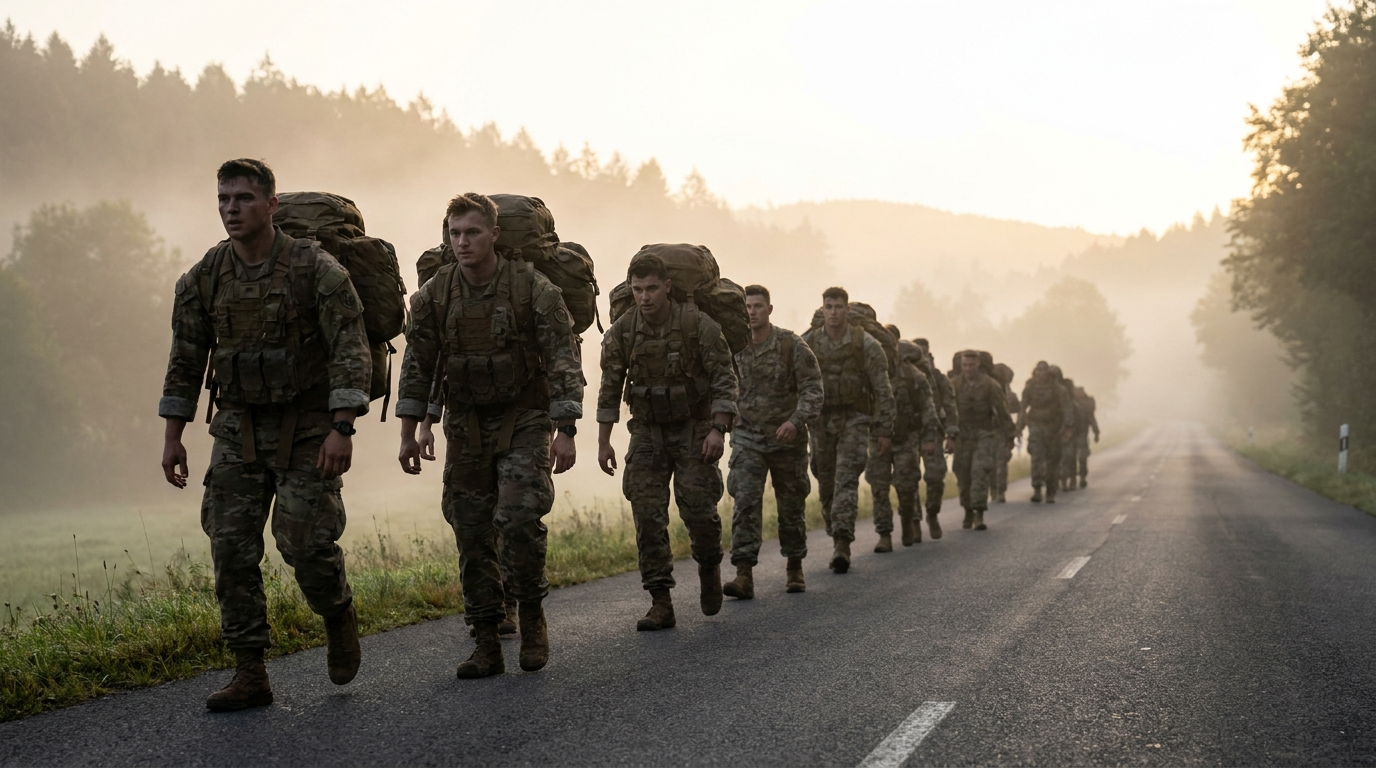
On the final morning you ruck 12 miles with a 35-pound rucksack and your gear, and you must finish in under three hours. Miss the time and you do not graduate, however well you did on everything else. This is where being undertrained on rucking ends careers in the course.
How many people pass Air Assault School?
The school does not publish a pass rate, and recent classes vary widely. A West Point class in 2023 graduated 185 of 260 students. A September 2025 class the school taught in Romania started with more than 200 and pinned wings on 82. An August 2026 class graduated 71 of 198, according to the University of North Georgia. Plan as if you will be in the hard class.
Getting a slot
- Go through your unit. Fort Campbell requests use a digital request form, and unit ATRRS managers cannot slot soldiers directly into the school's courses.
- Plan your lodging. The school's 2025 welcome letter says it provides no lodging for students.
- Leave the gadgets. Watches with storage, Whoop bands and smart rings, energy drinks and nicotine pouches are on the prohibited list.
- Check your location's prerequisites. Some sites add their own. Schofield Barracks, for example, has asked for a 12-mile foot march and an obstacle course within 90 days of the course start.
How to train for Air Assault School
Rucking and running decide most outcomes. Build a rucking base over months so 12 miles with 35 pounds is routine, not a shock: follow our free 12-mile ruck program and set your target pace with the ruck pace calculator. Sharpen your 2-mile and 4-mile runs so Day Zero is easy, and train grip and upper-body strength for the obstacle course and the rappels. Our military ruck march guide covers the details.

Hybrid Weight Vest MK2
Air Assault ends with a 12-mile ruck under the clock. The Hybrid Weight Vest MK2 builds the load tolerance and conditioning to get you across it.
Shop now →Weighing other schools? Compare Sapper School and RASP.
Sources: The Sabalauski Air Assault School, Air Assault course and FY26/FY27 schedules; class reports from DVIDS (September 2025), Joint Base Anacostia-Bolling (January 2026), Air Force Reserve Command (March 2025), the National Guard (August 2023) and the University of North Georgia (August 2026). Standards can vary by location and change over time; confirm current requirements with the school.
Frequently Asked Questions
How long is Air Assault School?
About two weeks on the calendar: a Day Zero of entry tests, then 10 days of instruction across three phases, Combat Assault, Sling Load and Rappel, ending with a 12-mile ruck march.
What happens on Zero Day at Air Assault School?
A 2-mile run, a timed equipment layout and an obstacle course of about nine obstacles. In 2025 the school dismissed soldiers who failed to clear more than one obstacle. Showing up without your ID card, ID tags or a correctly filled out casualty feeder card is an automatic Day 0 safety drop.
What is the Air Assault School pass rate?
The school does not publish one, and it varies a lot by class. Recent classes we found graduated anywhere from about a third of their starters, such as 71 of 198 in August 2026, to about 70 percent, such as 185 of 260 at West Point in 2023.
How heavy is the Air Assault 12-mile ruck?
Students carry a 35-pound rucksack plus their gear and must finish the 12 miles in under three hours. It is the last test, and missing the time means you do not graduate.
Where is Air Assault School?
The main course is The Sabalauski Air Assault School at Fort Campbell, Kentucky, which rappels from a 34-foot tower. Courses also run at other locations, including Fort Drum and the Lightning Academy at Schofield Barracks, and the school runs mobile classes.