
Best Lifting Belt: How to Choose the Right One for Your Training

A lifting belt is one of the few pieces of gym gear with decades of evidence behind it: brace properly against a good belt and you lift more weight with a stiffer, safer trunk. But belts range from $20 nylon bands to $150 competition leather, and the best lifting belt for a powerlifter is often the wrong belt for someone who squats, runs, and does conditioning in the same week. Here is how to choose.
If you are still deciding whether you need one at all, start with lifting belt vs no belt.
What a belt actually does
A belt does not hold your spine in place. It gives your core something to brace against. When you take a big breath and push your midsection out into the belt, intra-abdominal pressure rises, and that pressure is what stiffens your trunk under load. The belt is an amplifier for bracing you should already be doing. Technique matters more than the belt itself, and our guide on how to use a lifting belt covers it step by step.
The four decisions that matter
1. Material: leather vs nylon
Thick leather is maximally rigid, which is ideal for maximal squats and deadlifts and overkill for everything else. Modern nylon belts hit a middle ground: stiff enough to brace hard against, flexible enough to wear through a full training session that includes cleans, lunges, carries, and conditioning. If your training looks like powerlifting, lean leather. If it looks like hybrid training or military prep, nylon wins.
2. Width
Four inches is the standard for good reason: it covers the distance between ribs and hips on most torsos. A belt that digs into your ribs in the squat hole is the wrong width or the wrong position, not a fact of life. Shorter-torso lifters sometimes do better with a slightly tapered or narrower front.
3. Buckle system
Prong buckles are cheap and reliable but slow. Levers are fast and crank very tight but lock you into one size unless you re-screw the hardware. Self-locking quick-release systems adjust in seconds between exercises, hold under maximal load, and have become the default for athletes who change belt tightness between squats, deadlifts, and conditioning pieces. We compare all three in detail in our belt buckle comparison.
4. Fit
Measure around your navel, not your pant size. The belt should sit snug at your natural bracing position with room to take a full breath into it. Between sizes, size up if you train in layers or plan to wear it over a shirt during cold-weather rucks and outdoor sessions.
Match the belt to your training
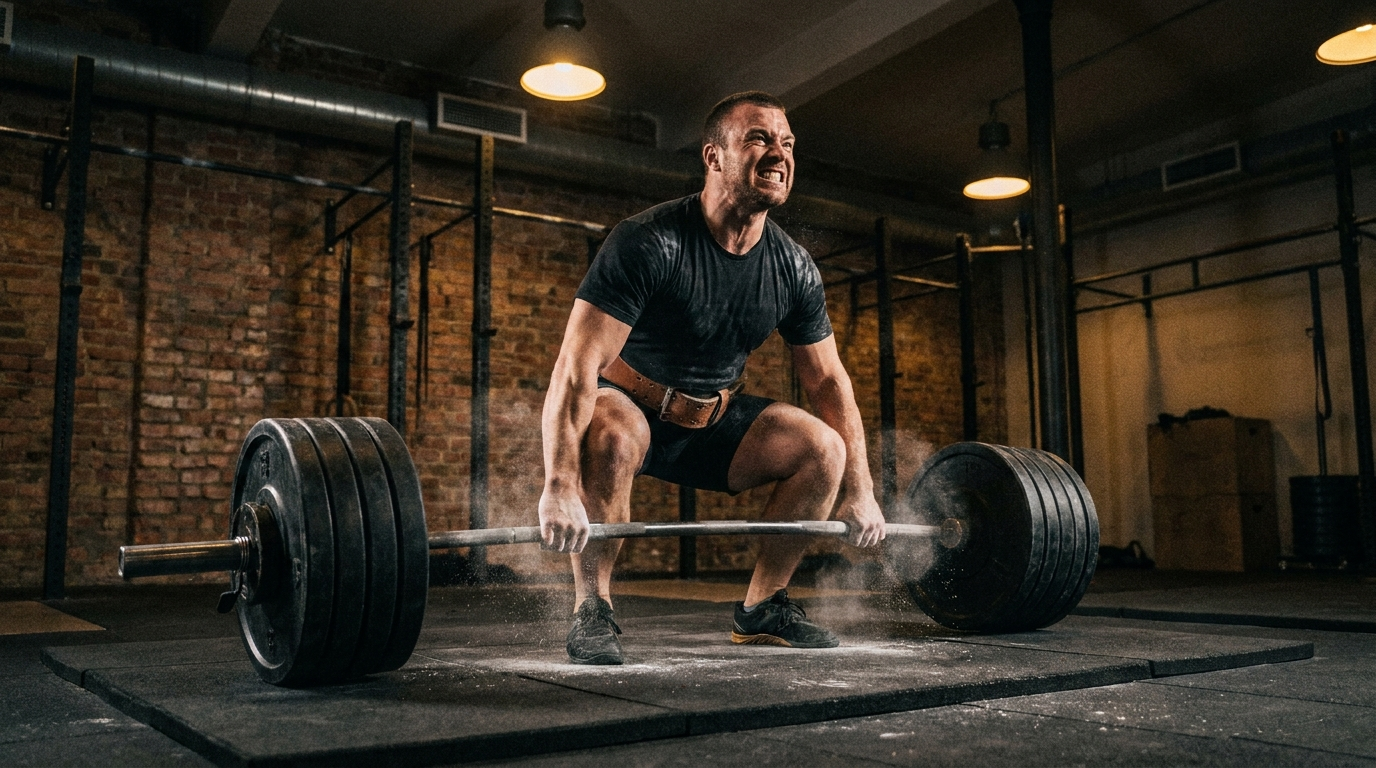
Competition powerlifter: 10 or 13 mm leather, lever or prong, worn for squats and deadlifts only. General strength and hybrid athletes: a rigid nylon belt with a self-locking buckle that moves between barbell work, sandbag training, and conditioning without leaving welts. That versatility is exactly what the Battle Bunker Hybrid Belt was built for, and you can read the design logic in what a hybrid lifting belt is.

Built for Hybrid Operations
Battle Bunker Hybrid Belt
Self-locking, rigid where it counts, and fast to adjust between lifts. One belt for squats, deadlifts, sandbag work, and conditioning, $49.98.
Shop now →Frequently asked questions
Is a more expensive lifting belt worth it?
Past about $50, you are paying for leather thickness, competition approval stamps, or branding. A well-made nylon belt with solid stitching and a reliable buckle covers everything short of equipped powerlifting.
What belt width should I get?
4 inches for most lifters. Go narrower or tapered only if a standard belt physically jams between your ribs and hips at the bottom of a squat.
Should my first belt be leather or nylon?
Nylon, unless you already know your training is going to stay barbell-only. It is more comfortable to learn bracing with, more versatile, and cheaper to get right the first time.
When should I actually wear the belt?
Heavy compound sets, roughly 80 percent and up, plus max-effort conditioning pieces where trunk fatigue is the limiter. Train your unbelted brace on the lighter work. The full logic is in how to use a lifting belt.
Related reading
Round out your gear knowledge: lever belt vs prong vs self-locking, how to choose wrist wraps, and the best lifting straps for heavy pulls.