
Lever Belt vs Prong vs Self-Locking: Which Belt Buckle Is Best?

Every lifting belt argument eventually becomes a buckle argument. Lever loyalists love the crank-tight security. Prong traditionalists trust hardware with no moving parts. And a growing group of athletes has moved to self-locking systems because they adjust in seconds. All three hold under heavy loads, and buying the wrong one for your training style is an expensive lesson. Here is the honest comparison.
How each system works
Prong: a metal buckle and holes, exactly like a pants belt but heavier. Simple, proven, nothing to break.
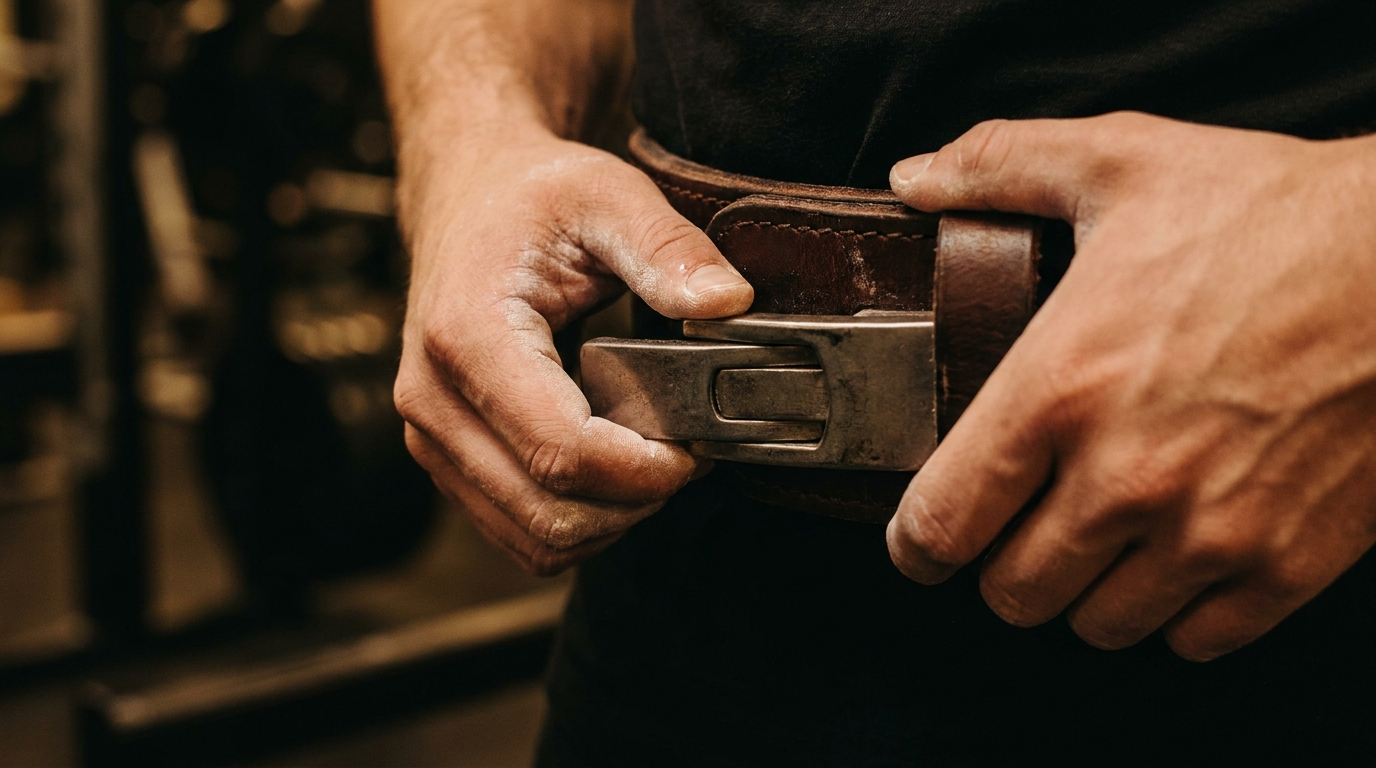
Lever: a metal cam bolted to the belt at your size. Flip it closed and it pulls the belt tighter than most people can manage with a prong. Changing tightness means unscrewing and repositioning the lever.
Self-locking: a slide-through frame buckle, usually on a rigid nylon belt. Pull the tail to your tension, the frame locks under load, and a quick release drops it instantly. Adjustment range is continuous rather than hole-to-hole.
The trade-offs that actually matter
Tightness and security
Lever wins pure crank tightness, which is why equipped powerlifters live in them. But maximum tightness is only useful on maximal attempts. Prong and self-locking systems both hold securely at the tension real training requires, and a properly set self-locking buckle does not slip under a heavy brace.
Speed between sets
Lever is fastest on and off at one fixed tightness. Self-locking is fastest when tension changes: squat tight, deadlift looser, conditioning looser still, all without tools. Prong is slowest at everything, which matters more than people admit when you are wrapping a belt on and off twelve times a session.
One tightness or many
This is the real dividing line. If you wear a belt for two barbell lifts at one tension, the lever's fixed size is no cost at all. If your session moves from barbell to sandbag cleans to weighted carries, refastening a lever with a screwdriver is not happening. Continuous adjustment wins for hybrid training, and it is why we built the Hybrid Belt around a self-locking system. The background is in what a hybrid lifting belt is.
Durability
Prong hardware is nearly indestructible. Good levers last but the screws loosen and the cam can crack if it is cheap. Self-locking frames have no moving parts under load and fail only if the webbing or stitching fails, so buy one with reinforced stitching or do not buy one at all.
Which buckle should you buy?
Competition powerlifter at fixed attempt weights: lever. Barbell purist who wants zero-maintenance hardware for life: prong. Everyone who trains strength alongside conditioning, sandbag work, or military prep: self-locking, and it is not close. Match the buckle decision with the material and width guidance in our best lifting belt guide.

Self-Locking System
Battle Bunker Hybrid Belt
Rigid support with a self-locking buckle that adjusts in seconds between squats, pulls, and conditioning. $49.98, or grab the Strength Bundle with straps and wraps.
Shop now →Frequently asked questions
Are lever belts allowed in powerlifting competitions?
Yes, levers, prongs, and most quick-release buckles are legal in major federations, subject to thickness and width limits. Check your federation's approved gear list before meet day.
Do self-locking belts slip?
A quality frame buckle locks harder as the belt loads, the same principle as a ratchet strap. Slipping almost always traces to worn webbing or a cheap frame, not the design.
Can I change the tightness of a lever belt?
Only by unscrewing the lever and moving it, which takes a screwdriver and a few minutes. That is fine for a fixed competition setting and impractical mid-workout.
Is a prong belt too slow for regular training?
Not if you wear it at one tension for a couple of lifts. It becomes a nuisance when you are on and off with it many times per session or changing tightness between movements.
Related reading
More belt and gear guidance: best lifting belt: how to choose, how to use a lifting belt, and lifting belt vs no belt.