
Border Patrol Fitness Test: Events, Standards, and How to Prepare

The Border Patrol Agent job is one of the most physically demanding roles in federal law enforcement, and the hiring process reflects that. Before you can put on the badge, you have to pass the pre-employment Physical Fitness Test, known as the PFT-1. It is not the hardest test in federal service, but people fail it every year because they underestimate it or train the wrong things. This guide covers the exact events, the current standards, and a simple plan to show up ready.
What the Border Patrol PFT-1 Measures
U.S. Customs and Border Protection uses the PFT-1 to predict whether a candidate can handle academy training and the physical demands of the job. Border Patrol Agents work around the clock, across rough terrain, in every kind of weather, often far from backup. The test is deliberately job-related, and the standards are the same for every applicant regardless of age or gender.
Importantly, the PFT happens after a tentative job offer, but CBP expects you to be ready at the time you apply. You do not get months of notice to get in shape, so the smart move is to train before you ever submit the application.
The Three Events and Standards
The current Border Patrol PFT-1 has three events, performed in sequence:
- Sit-ups: 25 proper-form repetitions in 1 minute
- Push-ups: 20 proper-form repetitions in 1 minute
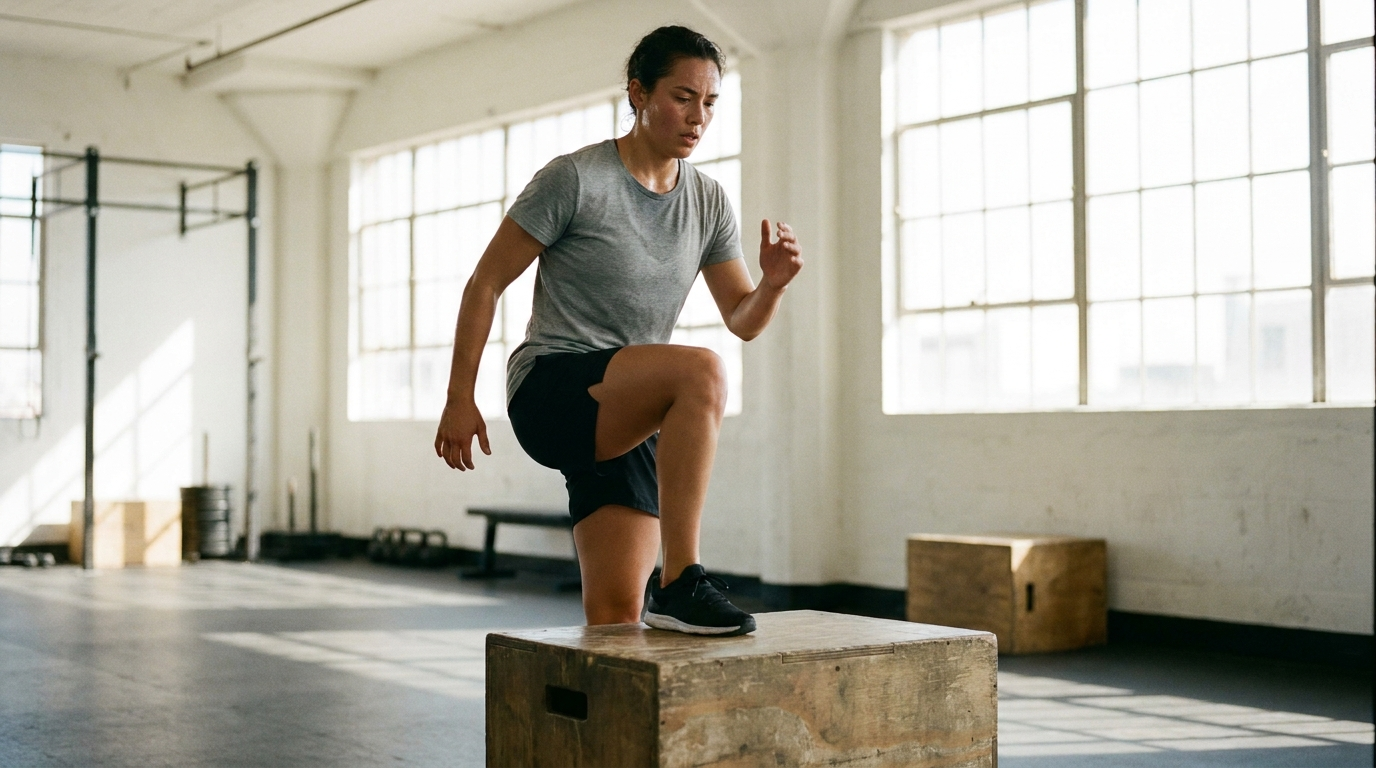
- 14-inch step test: 120 steps per minute for 5 minutes, stepping up and down on a 14-inch platform
On paper these numbers look modest, and for a well-conditioned person they are. The catch is form and the step test. Repetitions only count with full range of motion, and the five-minute step test at a fixed cadence is a genuine cardiovascular grind that punishes anyone who skipped conditioning. You get one retest opportunity if you fail, so it is worth arriving with margin rather than hoping to scrape by.
How to Train for Each Event
Push-Ups and Sit-Ups
Both are muscular-endurance events, so the way to build them is frequent, sub-maximal volume rather than occasional all-out sets. Train push-ups and sit-ups three to four times a week, stopping a rep or two short of failure and accumulating total reps across several sets. Grease-the-groove style work, spreading small sets through the day, builds capacity fast without burning you out. Focus obsessively on form, because a test grader will not count a sagging push-up or a half sit-up.
The Step Test
The step test is really an aerobic test in disguise. Five minutes at 120 steps per minute is a steady, relentless cadence, so you want both leg endurance and cardiovascular base. Practice with a metronome or cadence app on a sturdy 14-inch box, building from two or three minutes up to the full five. Supplement with zone-two cardio like brisk walking, easy running, rucking, or cycling three times a week to grow the aerobic engine that keeps your heart rate under control during the test.
Put a Number on Your Fitness
Because the PFT-1 is pass or fail with modest reps, the bigger question is your overall readiness for the academy and the job, which demand far more than the test itself. Benchmarking your run times and calisthenics against military and law-enforcement standards is a useful gut check. Our free military PT calculators let you score yourself across common fitness events so you can see where you stand and set targets well above the minimum.
Don't Stop at the Minimum
Passing the PFT-1 gets you to the academy, but the academy and the job are where the real physical demands begin. Agents run, climb, carry gear, and control subjects in unpredictable conditions. Body composition also matters for durability and long-term health in a physical career, and the same waist-based measures the military now emphasizes are a reasonable personal benchmark. You can check yours with our waist-to-height ratio calculator. Building strength and conditioning beyond the test is what keeps you safe and effective once you are on the line.
If you want to see how federal law-enforcement fitness compares across agencies, our breakdown of the FBI Physical Fitness Test is a useful companion read, and the Firefighter CPAT guide covers another physically demanding public-safety path.
Frequently Asked Questions
How many push-ups and sit-ups does Border Patrol require?
The current PFT-1 requires 20 proper-form push-ups in one minute and 25 proper-form sit-ups in one minute, followed by a five-minute step test at 120 steps per minute on a 14-inch platform.
Is there a run in the Border Patrol fitness test?
The current pre-employment PFT-1 uses a five-minute step test rather than a timed run to assess cardiovascular fitness. That said, running is a major part of academy training and the job, so you should still train your run.
What happens if I fail the Border Patrol PFT?
Applicants are given one opportunity to retest. CBP also publishes a six-week Physical Readiness Program to help candidates prepare, but you are far better off arriving already conditioned rather than relying on the retest.
How should I start training if I am out of shape?
Begin with frequent, low-volume calisthenics and steady aerobic work, then build over several weeks. Prioritize consistency over intensity early, nail your form, and progress the step test gradually. Give yourself at least six to eight weeks, and more if you are starting from a low base.
The Bottom Line
The Border Patrol PFT-1 is very passable with a few weeks of focused preparation: 20 push-ups, 25 sit-ups, and a five-minute step test. Train the calisthenics with volume and clean form, build an aerobic base for the step test, and do not treat the minimum as your ceiling. Score your overall fitness with our PT calculators and show up with margin to spare.