
How to Max Your Navy PRT: A Complete Training Guide

The Navy Physical Readiness Test is three events: push-ups, curl-ups (or plank), and a 1.5-mile run. It is one of the more achievable military fitness tests to max, but achieving Outstanding High on all three events requires deliberate, consistent training. This guide breaks down each event, what the top scores require, and a straightforward plan to get there.
Use the Navy PRT calculator to see your current scores, check your performance category, and identify which event has the most room to move.
Want to see how the Navy PRT compares to the Marine Corps, Army, Air Force, and Coast Guard tests? Read our military fitness test comparison.
How the Navy PRT Is Scored
Each event is scored by performance category: Outstanding High, Outstanding Low, Excellent High, Excellent Low, Good High, Good Low, Satisfactory High, Satisfactory Low, and Probationary. There is no numeric composite like the ACFT. Your overall PRT classification is based on your lowest-scoring event.
This matters for training. One weak event drags your entire classification down. If you score Outstanding High on the run and push-ups but only Good on curl-ups, your classification is Good. Fix the weakest link first.
Event 1: Push-Ups
The Navy PRT push-up is a standard chest-to-deck, full lockout rep. No rest is allowed during the set. For males aged 20-24, Outstanding High requires 87 reps. For females in the same bracket, 50 reps.
These are high numbers that take consistent volume training to reach, not occasional max-effort sets.
Build volume with sub-failure sets. Three to five sets at 50-60% of your max, done two to three times per day, is more effective than one daily max-out. This approach builds the endurance needed for 80+ reps without accumulating the shoulder fatigue that stalls progress.
Pace practice on test day. Going out at full speed and dying at rep 65 is a pattern that shows up constantly. Know your sustainable pace before you test. Practice sets at that pace, not your sprint pace.
Accessory work: Tricep dips, close-grip push-ups, and band-resisted push-ups build the pushing muscles that support high-rep counts. The Battle Bunker Battle Bands add resistance to bodyweight work and are easy to use anywhere without equipment.
Event 2: Curl-Ups or Plank
The Navy PRT allows a substitution. Curl-ups are the default. The plank option requires a 3:40 hold to score Outstanding High for most age categories.
Choosing between them: If your curl-up numbers are already near Outstanding High, stay with curl-ups. If you are stuck in the Good or Satisfactory range and struggling to push higher, switch to the plank. Most sailors find the plank easier to improve on a short timeline with consistent practice.
Training the plank: Hold to form failure, rest 90 seconds, repeat. Four rounds, four to five days a week. Most sailors reach 3:40 within six to eight weeks of dedicated training. Do not let your hips sag or rise. Maintain a straight line from head to heel and breathe steadily.
Training curl-ups: The Navy curl-up starts with hands on thighs and ends with elbows touching knees. It is a partial range sit-up, not a full crunch. Train the exact standard. Volume and pacing follow the same approach as push-ups: sub-failure sets, multiple times per day.
Event 3: The 1.5-Mile Run
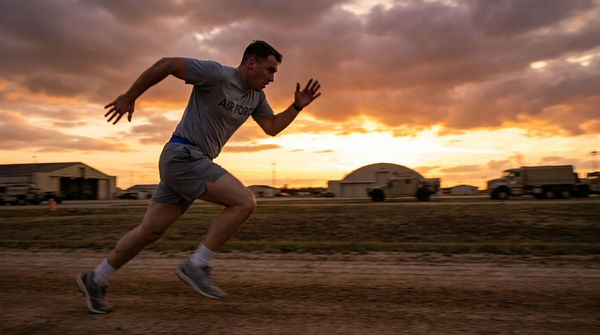
The run is typically the event that separates good PRT scores from outstanding ones. For males aged 20-24, Outstanding High requires a time under 8:15. For females in the same bracket, under 9:59.
These are fast times. An 8:15 1.5-mile is a 5:30 per mile pace. Getting there requires structured run training, not just occasional jogging.
Build your aerobic base. Two to three easy runs per week at a conversational pace build the cardiovascular foundation that supports fast race times. If your current 1.5-mile time is above 10:30, spend three to four weeks on easy mileage before adding speed work.
Interval training closes the gap. Once your base is in place, add one interval session per week: 6 x 400m at your goal mile pace with 60 seconds rest. This trains your body to maintain race speed without doing all your running at race effort.
Test yourself in week 6. Run a full 1.5-mile time trial and plug your time into the Navy PRT Calculator to confirm which performance category you are hitting. Adjust your training based on the result.
Alternative Cardio Options
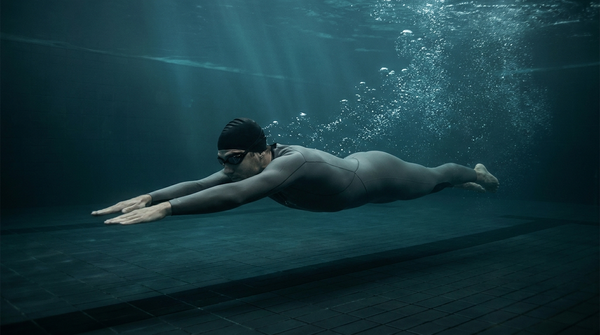
The Navy allows sailors to substitute a 500-yard swim, 450-meter swim, stationary bike, or elliptical for the run under certain conditions. These are legitimate options but require the same structured approach. If you are using an alternative cardio test, apply the same base-building and interval principles to that modality.
8-Week Navy PRT Training Plan
- Monday: Push-up volume (3 sets at 55% max), Easy 25-min run
- Tuesday: Plank accumulation or curl-up volume, Core circuit
- Wednesday: 6 x 400m intervals at goal run pace
- Thursday: Push-up volume, Plank or curl-up practice
- Friday: Tempo run (12-15 min at goal race pace)
- Saturday: Long easy run (30-40 min), Push-up pace sets
- Sunday: Rest
Week 6: Run a full 1.5-mile time trial and a push-up max test. Check scores in the Navy PRT Calculator. Week 8: Taper down volume by 40% and rest two days before testing.
Common PRT Mistakes
Ignoring the weakest event. Your PRT classification is only as good as your lowest event. Find your floor and bring it up before optimizing your strong events.
Maxing out push-ups every day. Failure sets daily do not build the endurance needed for 80+ reps. Sub-failure volume does. The adaptation is different.
Skipping the plank option when curl-up numbers are stuck. If your curl-ups have plateaued in the Good range for two or more PRT cycles, switch to the plank. Six weeks of dedicated plank training will almost certainly score higher.
Not knowing which category you are in. The PRT does not use a simple point total. Run your numbers through the Navy PRT Calculator to see your actual performance categories, not just your raw scores.

Battle Bunker Battle Bands
Resistance bands for push-up training, assisted pull-up work, and mobility. Three resistance levels in one set. Built for military PT prep wherever you train.
Shop Battle BandsThe Bottom Line
The Navy PRT is three events with a clear scoring system. Max all three and you score Outstanding High across the board. The path there is simple: build aerobic base and add speed work for the run, use sub-failure volume for push-ups and curl-ups, and train the plank consistently if you are using it as the core substitution.
Start by identifying your weakest event and prioritizing it. Use the Navy PRT Calculator to confirm your current categories and know exactly what it takes to move up. Fix the floor, then raise the ceiling.